Within Faster Reading
How Fast Do Adults Really Read?
Adult reading speed is usually a few hundred words per minute, but the number only matters when comprehension stays intact.

On this page
- Typical words per minute ranges
- Why fiction and nonfiction differ
- How to compare your own pace
Page outline Jump by section
Introduction
A realistic adult reading-speed benchmark is much lower than many speed-reading adverts suggest. For English silent reading, the best-supported average is about 238 words per minute for non-fiction and 260 words per minute for fiction, with many adults falling roughly between 175–300 wpm for non-fiction and 200–320 wpm for fiction. Those numbers matter only when comprehension is still intact; a faster number produced by skimming, guessing, or skipping detail is measuring a different task.[Ghent University Bibliography]biblio.ugent.beOpen source on ugent.be.
That means “increasing reading speed” is best framed as improving useful reading efficiency, not chasing a spectacular words-per-minute score. A reader who moves from 180 to 230 wpm on everyday work documents while remembering the key points has made a meaningful gain. A reader who claims 800 wpm but cannot explain the argument has not improved in the way most study, work, or serious leisure reading requires.
Typical Words-Per-Minute Ranges
The strongest benchmark comes from Marc Brysbaert’s 2019 review and meta-analysis in the Journal of Memory and Language. It pooled 190 studies with 18,573 participants and estimated average adult silent reading in English at 238 wpm for non-fiction and 260 wpm for fiction. It also found that previously repeated figures around 300 wpm had probably overstated ordinary adult reading speed.[Ghent University Bibliography]biblio.ugent.beOpen source on ugent.be.
A practical way to read the evidence is:
Reading situationRealistic adult benchmarkSilent reading, English non-fictionAverage about 238 wpm; common range about 175–300 wpmSilent reading, English fictionAverage about 260 wpm; common range about 200–320 wpmReading aloudAverage about 183 wpmSkimming or scanningCan be much faster, but should not be compared with full reading
These figures are not a moral ranking of readers. They are a baseline for interpreting your own pace. Someone reading 210 wpm with strong comprehension of dense non-fiction may be reading more effectively than someone moving at 340 wpm through the same material but retaining only the surface.
Reading aloud is slower because it is limited by articulation: you have to say the words, not just recognise and understand them. Brysbaert’s review estimated average adult oral reading at 183 wpm, based on 77 studies and 5,965 participants. Guidance from the SpLD Assessment Standards Committee similarly treats oral rate as useful for some assessment contexts but less central than silent reading for older students and adults, because silent reading is the normal adult mode for study and work.[Ghent University Bibliography]biblio.ugent.beOpen source on ugent.be.
Why Fiction and Non-Fiction Differ
Fiction is often read faster not because it is “easier” in every meaningful sense, but because its surface features often demand less word-by-word processing. Brysbaert’s analysis found that the fiction/non-fiction difference could largely be predicted by word length: non-fiction tends to contain longer words, and longer words take more processing time.[Ghent University Bibliography]biblio.ugent.beOpen source on ugent.be.
A later study tested this word-length explanation in Dutch. It found that reading-rate predictions improved when average word length was taken into account: texts averaging 4.5 letters per word were predicted at around 270 wpm, while texts averaging 6.0 letters per word were predicted at around 202 wpm. The point is not that word length explains everything, but that the physical and linguistic make-up of a text changes what counts as a realistic pace.[Sage Journals]journals.sagepub.comSage JournalsImproving reading rate prediction with word length information: Evidence from Dutch - Marc Brysbaert, Longjiao Sui, Wouter D…
This is why a single personal reading-speed number can be misleading. The same adult might read a thriller at 310 wpm, a clear newspaper analysis at 250 wpm, a technical manual at 170 wpm, and a legal clause at 90 wpm with rereading. Those are not necessarily four different skill levels. They are four different reading jobs.
Why 500 WPM Is Usually a Different Task
The major warning from the research is the speed–accuracy trade-off. A 2016 review in Psychological Science in the Public Interest concluded that readers are unlikely to double or triple normal speed, for example from around 250 wpm to 500–750 wpm, while understanding the text as well as they would at their ordinary pace. Faster skimming can be useful when thorough understanding is not the goal, but it should not be treated as the same thing as full reading.[PubMed]pubmed.ncbi.nlm.nih.govSo Much to Read, So Little Time: How Do We Read, and Can Speed Reading Help? - PubMed…
This distinction explains why online tests and reading apps can produce impressive-looking scores. Many short tests use easy passages, brief exposure, and simple comprehension questions. The SpLD Assessment Standards Committee notes that reading-rate results vary widely depending on test design, whether comprehension is measured, what kind of information readers must recall, and whether the task encourages skimming, scanning, meaning-focused reading, or memorisation.[SASC]sasc.org.ukSASCMicrosoft WordReading and writing speeds guidance final (1)…
For adults trying to improve, that means a benchmark is only valid when the task resembles the reading you actually care about. A score from a one-minute passage does not tell you much about your ability to read a 40-page report, a textbook chapter, or a novel with sustained attention. For silent reading with comprehension, SASC guidance summarising Brysbaert recommends a longer passage lasting at least five minutes, because very short tests produce more variability.[SASC]sasc.org.ukSASCMicrosoft WordReading and writing speeds guidance final (1)…
How to Compare Your Own Pace
The most useful self-test is not a one-off speed contest. It is a repeatable check using material that resembles your normal reading.
Choose a text of at least 1,000–1,500 words, preferably long enough to take five minutes or more. Read at the pace you would normally use if the material mattered. Time yourself, then calculate words per minute by dividing the number of words by the number of minutes. Afterwards, write a short summary and answer a few content questions without looking back.
Interpret the result by purpose:
- Below about 175 wpm on ordinary non-fiction: this may still be fine for dense or unfamiliar material, but if it happens on easy text with poor comprehension, it may point to vocabulary, decoding, attention, or vision friction.
- Around 175–300 wpm on non-fiction: this is a normal adult range, not a sign of failure.
- Around 200–320 wpm on fiction: this fits the common adult range for English fiction.
- Above 350 wpm with detailed comprehension: possible for some readers and some texts, but worth verifying with harder questions and longer passages.
- Very high rates, such as 600–1,000 wpm: usually indicate skimming, selective attention, or unusually easy testing unless comprehension is measured rigorously.
There is no universal minimum speed at which comprehension suddenly becomes possible. Literacy researcher Timothy Shanahan has argued that he could not find evidence for a fixed 100 wpm threshold for comprehension, and that any true minimum would depend heavily on the reader, text, and task.[Shanahan on Literacy]shanahanonliteracy.comShanahan on Literacy How Important is Reading Rate? | Shanahan on LiteracyShanahan on Literacy How Important is Reading Rate? | Shanahan on Literacy
What a Realistic Benchmark Changes
Realistic benchmarks make reading improvement less glamorous but more useful. The goal is not to turn 240 wpm into 1,000 wpm. It is to reduce avoidable slowdowns on material you can reasonably understand: recognising common words more automatically, building background knowledge, improving vocabulary, and choosing the right mode for the task.
The 2016 speed-reading review makes this point directly: the way to maintain high comprehension while getting through text faster is to practise reading and become a more skilled language user, because language skill sits at the heart of reading speed.[PubMed]pubmed.ncbi.nlm.nih.govSo Much to Read, So Little Time: How Do We Read, and Can Speed Reading Help? - PubMed…
A good benchmark, then, is not “How close am I to a speed-reading claim?” It is “How fast can I read this kind of text while still doing what I came to do?” For everyday adult reading, a few hundred words per minute is normal. The stronger improvement target is flexible control: faster through familiar or low-stakes passages, slower through dense arguments, and always fast enough to serve understanding rather than replace it.

Amazon book picks
Further Reading
Books and field guides related to How Fast Do Adults Really Read?. Use these as the next step if you want deeper reading beyond the article.
How to Read a Book
Rating: 4.0/5 from 41 Google Books ratings
Teaches efficient reading strategies for different materials.

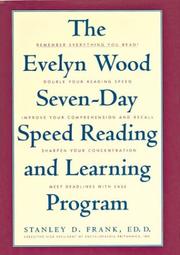
The Evelyn Wood Seven-Day Speed Reading and Learning Program
Covers reading-rate improvement methods.
eBay marketplace picks
Marketplace Samples
Example marketplace items related to this page. Use the search link to explore similar finds on eBay.


Endnotes
1.
Source: sasc.org.uk
Title: SASCMicrosoft Word
Link:https://www.sasc.org.uk/media/yovdkkvo/reading-and-writing-speeds-guidance-sasc-june-2020.pdf
Source snippet
Reading and writing speeds guidance final (1)...
2.
Source: fast.com
Link:https://fast.com/
3.
Source: biblio.ugent.be
Link:https://biblio.ugent.be/publication/8647789
4.
Source: journals.sagepub.com
Link:https://journals.sagepub.com/doi/10.1177/17470218211017100
Source snippet
Sage JournalsImproving reading rate prediction with word length information: Evidence from Dutch - Marc Brysbaert, Longjiao Sui, Wouter D...
5.
Source: pubmed.ncbi.nlm.nih.gov
Link:https://pubmed.ncbi.nlm.nih.gov/26769745/
Source snippet
So Much to Read, So Little Time: How Do We Read, and Can Speed Reading Help? - PubMed...
6.
Source: shanahanonliteracy.com
Title: Shanahan on Literacy How Important is Reading Rate? | Shanahan on Literacy
Link:https://www.shanahanonliteracy.com/blog/how-important-is-reading-rate
7.
Source: pmc.ncbi.nlm.nih.gov
Link:https://pmc.ncbi.nlm.nih.gov/articles/PMC4835101/
8.
Source: pmc.ncbi.nlm.nih.gov
Link:https://pmc.ncbi.nlm.nih.gov/articles/PMC10360968/
9.
Source: pmc.ncbi.nlm.nih.gov
Link:https://pmc.ncbi.nlm.nih.gov/articles/PMC10336603/
10.
Source: pubmed.ncbi.nlm.nih.gov
Link:https://pubmed.ncbi.nlm.nih.gov/33910411/
11.
Source: pmc.ncbi.nlm.nih.gov
Link:https://pmc.ncbi.nlm.nih.gov/articles/PMC3689316/
12.
Source: journals.sagepub.com
Link:https://journals.sagepub.com/doi/10.1177/1529100615623268
13.
Source: journals.sagepub.com
Link:https://journals.sagepub.com/doi/abs/10.1177/1529100615623267
14.
Source: reddit.com
Title: 300 WPM
Link:https://www.reddit.com/r/books/comments/tkcul5/300_wpm_do_you_people_actually_read_this_fast/
15.
Source: sasc.org.uk
Link:https://www.sasc.org.uk/media/4d4lsrfv/assessing-reading-and-writing-speeds-presentation-june-2020.pdf
16.
Source: bso.bradford.gov.uk
Title: bradford.gov.uk Help Sheet
Link:https://bso.bradford.gov.uk/userfiles/file/%21Learning%20Support/Help%20Sheets/Help%20Sheet%20-%20Repeated%20Reading.pdf
Additional References
17.
Source: osf.io
Link:https://osf.io/preprints/psyarxiv/xynwg_v1
Source snippet
per minute (wpm) for non-fiction and 260 wpm for fiction.Read more...
18.
Source: readingspeedtest.net
Title: Reading Speed Test
Link:https://readingspeedtest.net/
Source snippet
Calculate Your WPM & Improve...The Reading Speed Test is a powerful tool to [measure]({{ 'measure/' | relative_url }}) your words-per-minute (WPM) rate and assess your com...
19.
Source: youtube.com
Title: DID YOU PASS THE TEST? (3/8): The Actual Average Reading Speed WPM
Link:https://www.youtube.com/watch?v=I2Ieg4Ht4k8
Source snippet
What Is My Reading Speed In Words Per Minute?...
20.
Source: osf.io
Link:https://osf.io/3wfas/
Source snippet
Reading Rate9 Apr 2019 — For silent reading of English fiction most adults fall in the range of 175 to 300 wpm; for fiction the range is...
21.
Source: youtube.com
Title: What Is My Reading Speed In Words Per Minute?
Link:https://www.youtube.com/watch?v=20fNor1oxdc
Source snippet
Speed Reading for Beginners: The Quickest Way to Read Faster...
22.
Source: psychologicalscience.org
Title: speed reading promises are too good to be true scientists find 2
Link:https://www.psychologicalscience.org/observer/speed-reading-promises-are-too-good-to-be-true-scientists-find-2
23.
Source: researchgate.net
Link:https://www.researchgate.net/publication/332380784_How_many_words_do_we_read_per_minute_A_review_and_meta-analysis_of_reading_rate
24.
Source: researchgate.net
Link:https://www.researchgate.net/publication/290471702_Speed_Reading_You_Cant_Always_Get_What_You_Want_but_Can_You_Sometimes_Get_What_You_Need
25.
Source: fivefromfive.com.au
Link:https://fivefromfive.com.au/fluency/assessing-fluency/
26.
Source: scholarwithin.com
Link:https://scholarwithin.com/average-reading-speed?srsltid=AfmBOoo_ruL8SyI2HbAv8MDZUfqeOkyfnunsuTe5s4ou3W72XjIwM5t_
Topic Tree
Follow this branch
Parent topic
Faster ReadingRelated pages 11
- Dense Texts Why Hard Texts Need Slower Reading
- Inner Voice Should You Silence Your Inner Voice?
- Knowledge Why Familiar Topics Feel Faster to Read
- Measure The Reading Speed Test That Actually Helps
- Myths Why Speed Reading Promises Fall Apart
- Phrases Read Phrases, Not Just Words
- Practice Can Rereading Make You Faster?
- Purpose When Should You Slow Down or Skim?
- +3 more in sidebar