Within Paper Preview
A five minute map before close reading
A short scan of the abstract, headings, figures, conclusion, and references can turn dense reading into a targeted pass.
On this page
- The six step preview sequence
- The four questions to answer from memory
- How the preview guides the next pass
Page outline Jump by section
Introduction
A five-minute preview is one of the highest-leverage techniques for increasing reading speed with research papers. Instead of committing immediately to a dense, line-by-line reading, you spend a few minutes building a mental map of the paper: what question it asks, how it approaches that question, what evidence it presents, and whether the paper deserves deeper attention. This approach is closely aligned with the widely cited first pass of Srinivasan Keshav’s three-pass reading method, which is designed to provide a bird’s-eye view of a paper in roughly five to ten minutes before detailed analysis begins.[CCR+2dslsrv1.rnet.missouri.edu]ccr.sigcomm.orgpapers. I also de- scribe how to use this method to do a literature…Read more…
 The purpose is not to understand every detail. The purpose is to answer a small set of practical questions quickly so that the next reading pass becomes focused rather than exploratory. Readers who preview first spend less time getting lost in methods, equations, and technical terminology before they understand the paper’s main claim.[CCR+2Researcher Connect]ccr.sigcomm.orgpapers. I also de- scribe how to use this method to do a literature…Read more…
The six-step preview sequence
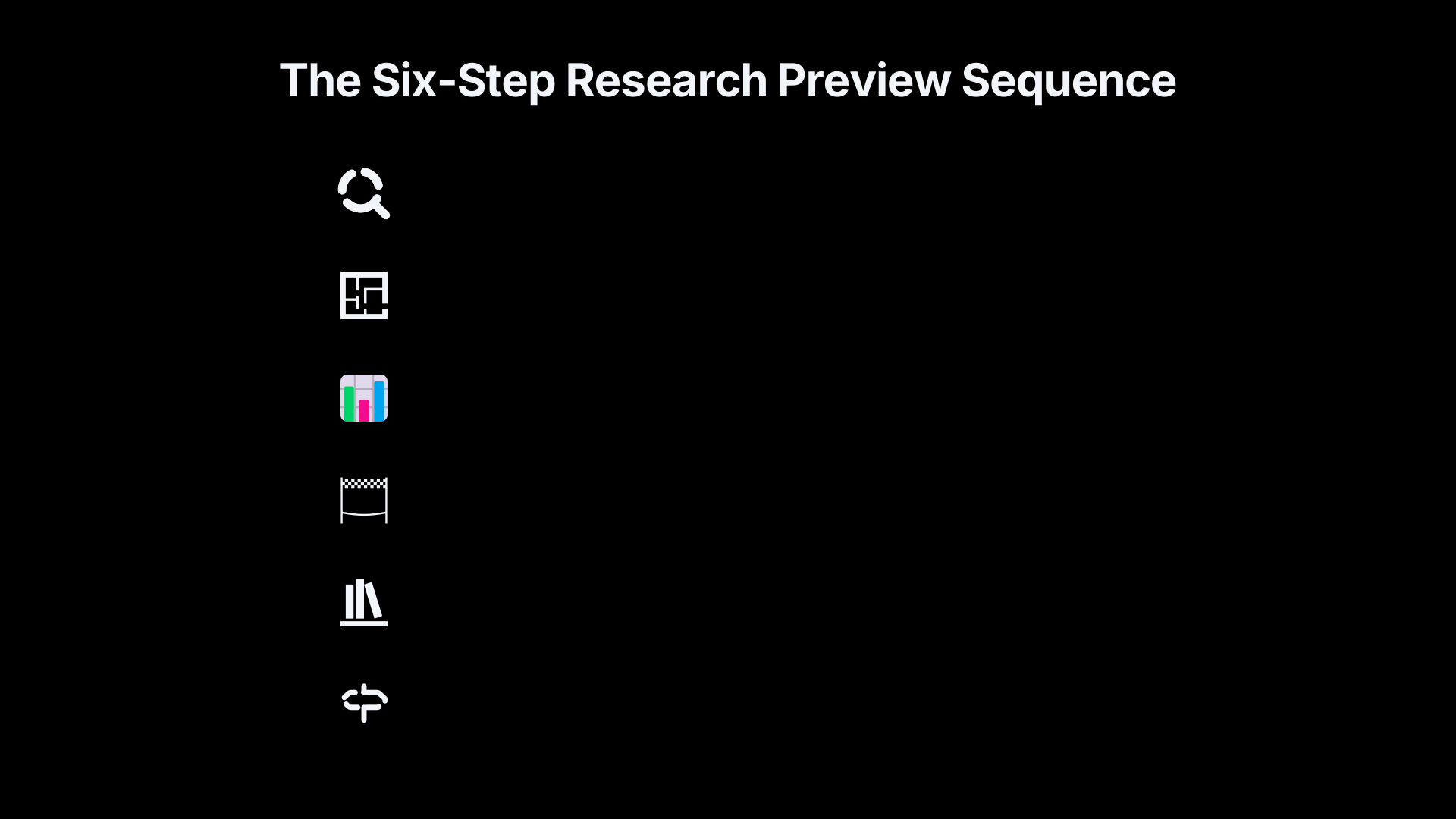
A useful preview routine should be fast enough to perform on every paper. The following sequence can usually be completed in about five minutes.
Step 1: Read the title and abstract
Start with the title and abstract. These sections are specifically designed to communicate the research problem, the approach, and the central findings in compressed form. A well-written abstract allows readers to decide quickly whether the paper is relevant to their needs.[Writing Center+2guides.library.illinois.edu]writing.wisc.eduWriting CenterWriting an Abstract for Your Research PaperAn abstract is a short summary of your (published or unpublished) research paper…
At the end of this step, try to state the paper’s main claim in one sentence. If you cannot do that, note the uncertainty rather than immediately reading further.
Step 2: Scan the section headings
Next, move through the paper looking only at major and minor headings. This reveals the structure of the argument and highlights where the authors place their emphasis. The goal is to understand the paper’s architecture, not its details.[CCR+2dslsrv1.rnet.missouri.edu]ccr.sigcomm.orgpapers. I also de- scribe how to use this method to do a literature…Read more…
Ask yourself:
- Is this primarily an experimental paper?
- A theoretical paper?
- A survey or review?
- A methodological contribution?
The answer shapes how you should read the paper later.
Step 3: Examine figures, tables, and captions
Figures often contain the paper’s most important evidence. Experienced researchers frequently inspect figures before reading results sections because figures show what the authors actually observed rather than merely what they claim.[Science+2EagleCite]science.orghow seriously read scientific paperHow to (seriously) read a scientific paperMar 21, 2016 — I start by reading the abstract. Then, I skim the introduction and flip t…
During the preview:
- Look at every figure.
- Read figure titles and captions.
- Identify the main comparison being made.
- Note any striking trends or outcomes.
A paper with ten pages of text may communicate its core result through two or three key figures.
Step 4: Read the conclusion
The conclusion often restates the paper’s main findings and explains what the authors believe matters most. Reading it immediately after examining the figures helps confirm whether your interpretation of the evidence matches the authors’ interpretation.[CCR+2Libraries]ccr.sigcomm.orgpapers. I also de- scribe how to use this method to do a literature…Read more…
Do not worry about whether you agree with the authors yet. The preview stage is about orientation rather than critique.
Step 5: Glance at the references
A quick look at the references reveals where the paper sits within the literature. Keshav specifically recommends mentally noting familiar citations during the first pass. Recognising recurring authors, landmark papers, or frequently cited methods provides useful context for later reading.[CCR]ccr.sigcomm.orgpapers. I also de- scribe how to use this method to do a literature…Read more…
You are not reading the bibliography in depth. You are checking whether the paper appears connected to the research conversation you care about.
Step 6: Decide on the next action
The preview should end with a decision.
Choose one of three outcomes:
- Discard: the paper is not relevant.
- Archive for later: potentially useful but not immediately important.
- Read closely: worth investing substantial attention.
This final decision is what creates the time-saving benefit. Many papers can be filtered out after five minutes rather than after an hour.
The four questions to answer from memory
A preview succeeds only if it leaves you with a usable mental model. Before moving on, close the paper and answer four questions without looking back.
What problem is the paper trying to solve?
State the research question as simply as possible.
Avoid repeating the title. Explain the underlying problem in plain language. If you cannot identify the problem, the paper’s purpose is still unclear.
What is the main claim?
Describe the central finding or contribution in one or two sentences.
The answer should be specific enough that another person could understand what the authors believe they discovered, demonstrated, or improved.
What evidence supports that claim?
This question forces you to remember the figures, tables, experiments, datasets, case studies, or theoretical arguments that appeared most important during the preview.
You do not need technical detail. You need the broad outline of the evidence.
Why might this paper matter?
Consider relevance from your perspective.
The answer may be:
- It addresses your research question.
- It introduces a useful method.
- It provides a key citation.
- It challenges an assumption.
- It fills a gap in your understanding.
If you cannot explain why the paper matters, it may not deserve a deeper reading.
How the preview guides the next pass
The greatest value of a preview is not the information gathered during those five minutes. The value lies in how it changes the next reading stage.
Without a preview, readers often encounter technical details before understanding the paper’s destination. Methods sections, equations, and specialised terminology consume attention while the broader argument remains unclear. With a preview, those details are interpreted within a framework that already exists.[CCR+2Paperpile]ccr.sigcomm.orgpapers. I also de- scribe how to use this method to do a literature…Read more…
A good preview creates a reading plan.
For example:
- If the figures seem convincing but the methodology is unfamiliar, focus the next pass on methods.
- If the claim appears surprising, focus on results and limitations.
- If the paper introduces a new technique, pay special attention to implementation details and comparisons.
- If the paper is only marginally relevant, read selectively rather than comprehensively.
This targeted approach reduces unnecessary effort and improves comprehension because every section is read with a purpose.

Common mistakes during the preview
The most frequent error is turning the preview into a full reading session.
Readers often stop at the first unfamiliar equation, method, or term and begin investigating details. Five minutes becomes thirty, and the strategic overview disappears.
Other common mistakes include:
- Reading every paragraph of the introduction.
- Ignoring figures and tables.
- Skipping the conclusion.
- Treating references as irrelevant.
- Failing to make a relevance decision at the end.
The preview should feel slightly incomplete. Its purpose is to identify where understanding should be invested, not to achieve understanding itself.
A five-minute habit that compounds
The routine is simple:
- Title and abstract.[authorservices.taylorandfrancis.com]authorservices.taylorandfrancis.comkeywords to write your title and abstract - Author ServicesEach journal will have its own word limit for abstracts which you'll find in t…
- Headings.
- Figures and captions.
- Conclusion.
- References.
- Decision.
Used consistently, this sequence turns research reading from a reactive activity into a deliberate one. Instead of discovering a paper’s value after an hour of effort, you discover it within minutes. That small change is often where the largest gains in reading speed originate, because the biggest time savings come not from reading faster, but from knowing what deserves to be read closely in the first place.[CCR+2dslsrv1.rnet.missouri.edu]ccr.sigcomm.orgpapers. I also de- scribe how to use this method to do a literature…Read more…
Amazon book picks
Further Reading
Books and field guides related to A five-minute map before close reading. Use these as the next step if you want deeper reading beyond the article.
The Craft of Research (Chicago Guides to Writing, Editing, an...
Explains research design, evidence, methods, and how experts interpret research papers.
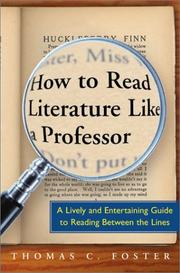
How to read literature like a professor
Strengthens the habit of quickly spotting structure, themes, and key signals before detailed analysis.
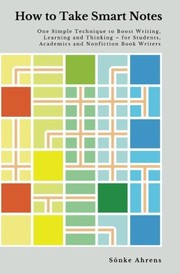
How to Take Smart Notes
Connects paper previewing and selective reading to effective note-taking and knowledge retention.

How to read a paper
Directly teaches readers how to assess papers efficiently before investing in deep reading.
eBay marketplace picks
Marketplace Samples
Example marketplace items related to this page. Use the search link to explore similar finds on eBay.
Endnotes
1.
Source: ccr.sigcomm.org
Link:https://ccr.sigcomm.org/online/files/p83-keshavA.pdf
Source snippet
papers. I also de- scribe how to use this method to do a literature...Read more...
2.
Source: dslsrv1.rnet.missouri.edu
Link:https://dslsrv1.rnet.missouri.edu/resources/HowToReadAPaper.pdf
Source snippet
abstract, and introduction. 2. Read the section and sub-section.Read more...
3.
Source: guides.library.illinois.edu
Title: Often it includes the focus, results, and conclusions of the study.Read more
Link:https://guides.library.illinois.edu/c.php?g=348214&p=2346645
Source snippet
How to Read a Scientific Paper: Structure of an ArticleMar 7, 2025 — The Abstract of an article is a short summary of the article's contents...
4.
Source: eaglecite.com
Title: Eagle Cite A Guide to How to Read Scientific Papers Effectively
Link:https://eaglecite.com/blogs/how-to-read-scientific-papers
Source snippet
I always start with the abstract, then jump to the figures and the conclusion. This gives me the big...Read more...
5.
Source: paperpile.com
Title: How to read a scientific paper [3 steps
Link:https://paperpile.com/g/read-scientific-paper/
Source snippet
2025]In this guide, we'll show you how to read a scientific paper in 3 steps. You will learn all about the scientific paper format, how t...
6.
Source: blog-sc.hku.hk
Link:https://blog-sc.hku.hk/reading-papers-efficiently-with-the-three-pass-approach/
Source snippet
Researcher ConnectReading Papers Efficiently with the Three-pass ApproachApr 15, 2024 — This blog post summarises the key points of the a...
7.
Source: science.org
Title: how seriously read scientific paper
Link:https://www.science.org/content/article/how-seriously-read-scientific-paper
Source snippet
How to (seriously) read a scientific paperMar 21, 2016 — I start by reading the abstract. Then, I skim the introduction and flip t...
8.
Source: writing.wisc.edu
Link:https://writing.wisc.edu/handbook/assignments/writing-an-abstract-for-your-research-paper/
Source snippet
Writing CenterWriting an Abstract for Your Research PaperAn abstract is a short summary of your (published or unpublished) research paper...
9.
Source: lib.purdue.edu
Link:https://lib.purdue.edu/wp-content/uploads/2024/06/Newest-Scientific-Paper.pdf
Source snippet
to Read a Scientific PaperWhen [skimming]({{ 'skimming/' | relative_url }}) the paper for the first time, after reading the abstract read the concluding section. It gives mo...
10.
Source: dictionary.cambridge.org
Link:https://dictionary.cambridge.org/zht/%E8%A9%9E%E5%85%B8/%E8%8B%B1%E8%AA%9E-%E6%BC%A2%E8%AA%9E-%E7%B9%81%E9%AB%94/how
Source snippet
cambridge.orgHOW中文(繁體)翻譯:劍橋詞典how的翻譯... 如何,怎么, (尤指身体或精神状况)怎么样, (用于询问经历或事情)怎么样…... 需要一個翻譯器嗎? 獲得快速、免費的翻譯!... how的發音是什麼?Read more...
11.
Source: answerthis.io
Link:https://answerthis.io/blog/how-to-read-scientific-papers-complete-guide-researchers
Source snippet
Breaking Down the Structure of Scientific PapersDec 20, 2024 — Abstract: This brief overview summarizes the key points, methods, and find...
12.
Source: authorservices.taylorandfrancis.com
Link:https://authorservices.taylorandfrancis.com/publishing-your-research/writing-your-paper/using-keywords-to-write-title-and-abstract/
Source snippet
keywords to write your title and abstract - Author ServicesEach journal will have its own word limit for abstracts which you'll find in t...
Additional References
13.
Source: let-all.com
Link:https://let-all.com/assets/slides/How-to-ALT22-Sam.pdf
Source snippet
How to Read a PaperRead a line of math. • Write proof on paper/whiteboard. • Discuss with/explain to friend/colleague. • Work through sma...
14.
Source: medium.com
Link:https://medium.com/data-science/how-to-read-scientific-papers-df3afd454179
15.
Source: facebook.com
Title: reading scientific papersscientific papers typically include the following sect
Link:https://www.facebook.com/OpenMedicineFoundation/posts/-reading-scientific-papersscientific-papers-typically-include-the-following-sect/1221256513534511/
Source snippet
Open Medicine FoundationJan 14, 2026 — When reading scientific papers, it can be helpful to use the abstract to get an idea of what the p...
16.
Source: youtube.com
Link:https://www.youtube.com/watch?v=WVv2jWXW0K4
Source snippet
How To Read Research Papers Effectively | Prof. David StucklerEvaluate its relevance to your current task or research. Three Reading Stra...
17.
Source: arc.duke.edu
Title: how to read and understand a scientific paper a guide for non scientists
Link:https://arc.duke.edu/how-to-read-and-understand-a-scientific-paper-a-guide-for-non-scientists/
Source snippet
Begin by reading the introduction, not the abstract. · 2. Identify the BIG QUESTION. · 3. Summarize the [background]({{ 'expertise/' | relative_url }}) in five sentences or l...
18.
Source: blogs.lse.ac.uk
Title: lse.ac.uk How to read and understand a scientific paper: a guide
Link:https://blogs.lse.ac.uk/impactofsocialsciences/2016/05/09/how-to-read-and-understand-a-scientific-paper-a-guide-for-non-scientists/
Source snippet
to read and understand a scientific paper: a guide...May 9, 2016 — Most primary research papers will be divided into the following secti...
Published: May 9, 2016
19.
Source: researchgate.net
Link:https://www.researchgate.net/profile/Hassan_Al_Garni/publication/365400594How_to_Read_and_Understand_a_Scientific_Research_Paper-_A_Three_Pass_Approach/links/6373b9c42f4bca7fd0621c4f/How-to-Read-and-Understand-a-Scientific-Research-Paper-A-Three-Pass-Approach.pdf
Source snippet
How to Read and Understand a Scientific Research PaperNov 15, 2022 — Three-Pass approach is a practical and efficient method...
20.
Source: medium.com
Link:https://medium.com/a-microbiome-scientist-at-large/how-to-read-a-scientific-paper-1f6a02b76424
Source snippet
How to Read a Scientific PaperRead the abstract for an overall idea of the topic, and look at when/where it was published. · Check out th...
21.
Source: dravetfoundation.org
Title: how to read a scientific paper part 2 14 21
Link:https://dravetfoundation.org/how-to-read-a-scientific-paper-part-2-14-21/
Source snippet
These sections should highlight the key findings from the study and provide the reader with the general focus of the paper.Read more...
22.
Source: researchgate.net
Title: What is the standard for writing
Link:https://www.researchgate.net/post/What-is-the-standard-for-writing-abstract-of-a-scientific-research-paper-for-publication
Source snippet
abstract of a scientific...19 Jan 2018 — Dear research expert, What is the standard for writing abstract of a scientific research paper...
Topic Tree