Within Known Words
How Words Become Fast to Read
Repeated encounters turn difficult words into familiar units that can be recognised quickly instead of rebuilt letter by letter.
On this page
- Why frequency strengthens word memory
- How specialist vocabulary becomes familiar
- When exposure is not enough for speed
Page outline Jump by section
Introduction
One of the fastest ways to increase reading speed is not to move the eyes differently but to make more words instantly familiar. When readers encounter useful vocabulary repeatedly, the brain gradually stops treating those words as new problems to solve. Instead of analysing letters one by one and reconstructing meaning from scratch, the reader recognises the word as a single, familiar unit. This shift from effortful decoding to automatic recognition is a major reason experienced readers move through text more quickly than beginners. Research on word recognition, orthographic mapping, and vocabulary learning consistently shows that repeated exposure strengthens the links between a word’s spelling, pronunciation, and meaning, making retrieval faster and more reliable.[Taylor & Francis Online+2Reading Rockets]tandfonline.comTaylor & Francis OnlineOrthographic Mapping in the Acquisition of Sight Word…by LC Ehri · 2014 · Cited by 1391 — Orthographic mapping…
Why Frequency Strengthens Word Memory
Every encounter with a word leaves a trace in memory. A single encounter may be enough to recognise a word later, but repeated encounters strengthen that memory and make access faster.
Researchers describe this process as orthographic mapping: the formation of durable connections between a word’s spelling, sounds, and meaning. As these connections become stronger, the word can be retrieved directly from memory rather than decoded each time it appears. Words stored in this way become what reading researchers call “sight words” — not words memorised visually, but words recognised instantly because their representations have become firmly established.[Taylor & Francis Online+2Reading Rockets]tandfonline.comTaylor & Francis OnlineOrthographic Mapping in the Acquisition of Sight Word…by LC Ehri · 2014 · Cited by 1391 — Orthographic mapping…
The effect is cumulative. A reader who encounters the word “consequence” hundreds of times does not process it in the same way as someone seeing it for the third or fourth time. The experienced reader recognises the entire pattern immediately. The less experienced reader may still devote attention to confirming the spelling, retrieving the meaning, or checking whether it fits the sentence.
Experimental studies of novel-word learning show that additional exposures improve memory for word forms and reduce processing effort during reading. Eye-tracking research has found that repeated encounters lead to fewer fixations and shorter processing times, suggesting that the word is becoming more efficiently represented in memory.[Taylor & Francis Online]tandfonline.comEye movement monitoring was used to explore the time course of orthographic learning in adult skilled readers while they read novel words…
For reading speed, this matters because every fraction of a second saved on individual words accumulates across sentences, pages, and books.
How Words Change from Slow to Automatic
The transition is gradual rather than sudden.
During early encounters, readers often rely heavily on decoding. They identify letter patterns, connect them to sounds, and infer meaning from context. After enough successful encounters, the brain begins storing the word as a familiar pattern that can be recognised directly.[Keys to Literacy+2LD@School]keystoliteracy.comthe role of orthographic mapping in learning to readKeys to LiteracyThe Role of Orthographic Mapping in Learning to Read5 May 2020 — Through orthographic mapping, students use the oral lang…
Several things happen simultaneously:
- The spelling becomes easier to recognise.
- The pronunciation becomes easier to retrieve.
- The meaning becomes more stable and precise.
- Connections to related words become stronger.
- Recognition becomes increasingly automatic.
Because all of these elements develop together, repeated exposure improves both speed and accuracy. Readers become less likely to hesitate, misidentify the word, or lose track of the sentence while interpreting it.[ERIC+2ResearchGate]eric.ed.govERICOrthographic Mapping in the Acquisition of Sight Wordby LC Ehri · 2014 · Cited by 1387 — Orthographic mapping (OM) involves the formation of letter-sound connections to bond the spelling…
An important detail is that meaningful exposure is usually more effective than isolated repetition. Encountering a word repeatedly in articles, books, conversations, and examples provides multiple opportunities to strengthen understanding and reinforce memory. The National Reading Panel highlighted repeated and varied exposure as an important contributor to vocabulary growth.[Reading Rockets+2Scholastic UK]readingrockets.orgReading RocketsFindings of the National Reading PanelRepetition and multiple exposure to vocabulary words will also assist vocabulary dev…

How Specialist Vocabulary Becomes Familiar
The power of repeated exposure becomes especially visible in technical reading.
A medical student initially encounters terms such as “hypertension”, “angiography”, or “myocardial”. These words may slow reading considerably because they require conscious attention. However, after months of reading textbooks, research papers, and clinical notes, the same terms are recognised almost instantly.
The same pattern appears in law, engineering, finance, computing, and other specialist fields. Readers often assume they have become faster readers in general when, in reality, they have become faster readers within a vocabulary-rich domain they encounter regularly.
This helps explain why professionals can read complex material in their own field at speeds that would be impossible for newcomers. The difference is not simply intelligence or reading technique. It is that thousands of specialised terms have become automatic through repeated exposure. Their meanings no longer need to be reconstructed during reading.
Vocabulary growth therefore contributes directly to reading speed. As domain-specific terms become familiar, the cognitive effort required to process each page decreases. The reader can focus on ideas, arguments, and relationships rather than on identifying individual words.
Why Context Repetition Works Better Than Simple Memorisation
Readers sometimes try to accelerate vocabulary growth through memorisation alone. While memorisation can help, automatic recognition develops most reliably when words appear repeatedly in meaningful contexts.
Consider the word “yield”. A reader may memorise a dictionary definition, but genuine fluency develops when the word appears across multiple situations: financial reports discussing bond yields, farming articles discussing crop yields, and road signs instructing drivers to yield. Through these encounters, the reader learns not only the core meaning but also typical patterns of use.
This broader knowledge supports faster recognition because the brain gains multiple retrieval pathways. When the word appears again, the reader does not need to evaluate every possible interpretation. Context and experience narrow the possibilities quickly.
Research on vocabulary instruction has similarly found benefits from encountering words repeatedly and in varied contexts rather than relying on a single exposure.[Reading Rockets]readingrockets.orgReading RocketsFindings of the National Reading PanelRepetition and multiple exposure to vocabulary words will also assist vocabulary dev…
When Exposure Is Not Enough for Speed
Repeated exposure is powerful, but frequency alone does not guarantee automatic recognition.
If a reader repeatedly encounters a word without understanding it, progress may be slow. Meaning plays an important role in establishing durable word knowledge. A word that remains vague or confusing is less likely to become instantly recognisable.[Harriett Janetos]harriettjanetos.substack.comHarriett JanetosWhat Was She Thinking: Linnea Ehri Explains…Meaning is necessary for forming sight words in memory but it isn't necess…
Exposure can also be less effective when:
- The word is encountered too infrequently.
- Decoding remains difficult.
- The reader consistently mispronounces the word.
- Context never makes the meaning clear.
- Encounters are concentrated in a short period and then disappear.
Studies of word learning indicate that both exposure frequency and ease of decoding influence how well word forms are learned. Repetition helps, but readers benefit most when they can accurately identify the word and connect it to meaning.[PMC]pmc.ncbi.nlm.nih.govLearning new words through reading: do robust spelling…by RC Hulme · 2022 · Cited by 21 — Results showed that greater decoding ease…
This is why simply seeing a difficult technical term a few times may not noticeably increase reading speed. The word must be encountered often enough, understood well enough, and processed accurately enough for automatic recognition to develop.

What This Means for Faster Reading
Reading speed improves when fewer words require conscious effort. Repeated exposure gradually converts unfamiliar vocabulary into instantly recognised units, reducing pauses, uncertainty, and decoding demands.
The practical implication is straightforward: readers who regularly engage with substantial texts accumulate thousands of encounters with important words. Over time, those words become automatic. As automatic recognition spreads across a larger share of the vocabulary in a text, reading becomes smoother, faster, and less mentally demanding. The gain is not the result of forcing speed. It emerges because the reader increasingly recognises words as familiar patterns rather than puzzles to solve.[Reading Rockets+2ERIC]readingrockets.orgReading RocketsBasics: Sight Words and Orthographic MappingOrthographic mapping is the process of storing a word permanently in memory fo…
Amazon book picks
Further Reading
Books and field guides related to How Words Become Fast to Read. Use these as the next step if you want deeper reading beyond the article.

Word Power Made Easy
Matches the page's emphasis on repetition making words faster to recognize.
Make It Stick
Provides evidence-based insight into repetition, retrieval, and durable memory formation.
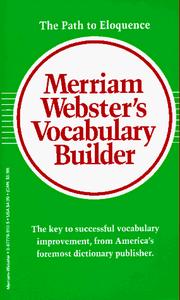
Merriam-Webster's vocabulary builder
Demonstrates how repeated encounters reinforce spelling, meaning, and recall.
1100 Words You Need to Know Flashcards, Second Edition
First published 2023. Subjects: English language, study and teaching, foreign speakers.
eBay marketplace picks
Marketplace Samples
Example marketplace items related to this page. Use the search link to explore similar finds on eBay.



Endnotes
1.
Source: eric.ed.gov
Title: ERICOrthographic Mapping in the Acquisition of Sight Word
Link:https://eric.ed.gov/?id=EJ1027413
Source snippet
by LC Ehri · 2014 · Cited by 1387 — Orthographic mapping (OM) involves the formation of letter-sound connections to bond the spelling...
2.
Source: researchgate.net
Link:https://www.researchgate.net/publication/344495917_Orthographic_learning_of_novel_words_in_adults_Effects_of_exposure_and_visual_attention_on_eye_movements
Source snippet
[Show full abstract] memorization of new words...Read more...
3.
Source: researchgate.net
Link:https://www.researchgate.net/publication/263499062_Orthographic_Mapping_in_the_Acquisition_of_Sight_Word_Reading_Spelling_Memory_and_Vocabulary_Learning
Source snippet
Orthographic Mapping in the Acquisition of Sight Word...Orthographic mapping (OM) involves the formation of letter-sound connections to...
4.
Source: researchgate.net
Title: Read more
Link:https://www.researchgate.net/publication/345073549_Reconceptualizing_the_Development_of_Sight_Word_Reading_and_Its_Relationship_to_Recoding
Source snippet
Reconceptualizing the Development of Sight Word...This process strengthens connections between the word's sounds, printed fo...
5.
Source: scholastic.com
Title: systematic instruction
Link:https://www.scholastic.com/education/ookaisland/assets/pdf/systematic-instruction.pdf
Source snippet
Report of the National Reading Panel24 May 2018 — Learning words [before reading]({{ 'before-reading/' | relative_url }}) a text also is helpful. Techniques such as task restructu...
Published: May 2018
6.
Source: pmc.ncbi.nlm.nih.gov
Link:https://pmc.ncbi.nlm.nih.gov/articles/PMC9748498/
Source snippet
Learning new words through reading: do robust spelling...by RC Hulme · 2022 · Cited by 21 — Results showed that greater decoding ease...
7.
Source: researchgate.net
Link:https://www.researchgate.net/publication/249134643_A_Review_of_the_National_Reading_Panel%27s_Studies_on_Fluency_The_Role_of_Text
Source snippet
A Review of the National Reading Panel's Studies on...11 Aug 2015 — The review in NRP (Hiebert & Fisher, 2005) showing that texts with m...
8.
Source: researchgate.net
Link:https://www.researchgate.net/publication/336068180_Orthographic_Mapping_Facilitates_Sight_Word_Memory_and_Vocabulary_Learning
Source snippet
ns to bond the spellings, pronunciations, and meanings of specific words in...
9.
Source: youtube.com
Title: The Science of Reading in Action: Orthographic Mapping in English
Link:https://www.youtube.com/watch?v=CQ_QMs2Adqg
Source snippet
Orthographic Mapping - Explained...
10.
Source: youtube.com
Title: Orthographic Mapping
Link:https://www.youtube.com/watch?v=vA05Oasiy4k
Source snippet
To explore how the brain converts effortful decoding into automatic processing through memory traces, you can watch Orthographic Mapping...
11.
Source: tandfonline.com
Link:https://www.tandfonline.com/doi/abs/10.1080/10888438.2013.819356
Source snippet
Taylor & Francis OnlineOrthographic Mapping in the Acquisition of Sight Word...by LC Ehri · 2014 · Cited by 1391 — Orthographic mapping...
12.
Source: readingrockets.org
Link:https://www.readingrockets.org/reading-101/reading-and-writing-basics/sight-words-and-orthographic-mapping
Source snippet
Reading RocketsBasics: Sight Words and Orthographic MappingOrthographic mapping is the process of storing a word permanently in memory fo...
13.
Source: ldatschool.ca
Link:https://www.ldatschool.ca/orthographic-mapping/
Source snippet
An Introduction to Orthographic Mappingby K Hipfner-Boucher · 2023 · Cited by 1 — Orthographic mapping is the cognitive process by which...
14.
Source: tandfonline.com
Link:https://www.tandfonline.com/doi/full/10.1080/20445911.2020.1823987
Source snippet
[Eye movement]({{ 'eye-tradeoff/' | relative_url }}) monitoring was used to explore the time course of orthographic learning in adult skilled readers while they read novel words...
15.
Source: keystoliteracy.com
Title: the role of orthographic mapping in learning to read
Link:https://keystoliteracy.com/blog/the-role-of-orthographic-mapping-in-learning-to-read/
Source snippet
Keys to LiteracyThe Role of Orthographic Mapping in Learning to Read5 May 2020 — Through orthographic mapping, students use the oral lang...
Published: May 2020
16.
Source: readingrockets.org
Link:https://www.readingrockets.org/topics/curriculum-and-instruction/articles/findings-national-reading-panel
Source snippet
Reading RocketsFindings of the National Reading PanelRepetition and multiple exposure to vocabulary words will also assist vocabulary dev...
17.
Source: harriettjanetos.substack.com
Link:https://harriettjanetos.substack.com/p/what-was-she-thinking-linnea-ehri
Source snippet
Harriett JanetosWhat Was She Thinking: Linnea Ehri Explains...Meaning is necessary for forming sight words in memory but it isn't necess...
18.
Source: nichd.nih.gov
Link:https://www.nichd.nih.gov/sites/default/files/publications/pubs/nrp/Documents/ch3.pdf
Source snippet
Reading Panel - Reports of the Subgroups - FluencyThe effect of repeated readings on reading rate, speech pauses, and word recognition ac...
19.
Source: www1.nichd.nih.gov
Link:https://www1.nichd.nih.gov/publications/pubs/nrp/documents/report.pdf
Source snippet
Reading Panel - Teaching Children to ReadThe National Reading Panel wishes to express its gratitude to the following individuals for thei...
20.
Source: pmc.ncbi.nlm.nih.gov
Link:https://pmc.ncbi.nlm.nih.gov/articles/PMC8559868/
Source snippet
as an Independent Trait in Predicting Reading...by TC Roembke · 2021 · Cited by 28 — Automaticity should be considered an individually r...
21.
Source: library.ecu.edu
Link:https://library.ecu.edu/networkingsummit/wp-content/pv-uploads/sites/257/2019/07/ehri.pdf
Source snippet
Mapping in the Acquisition of Sight Word...by LC Ehri · 2014 · Cited by 1429 — An important consequence of orthographic mapping is that...
22.
Source: bornlearning.org
Title: Panel concluded that guided repeated [oral reading]({{ ‘reading-aloud/’ | relative_url }}). Read more
Link:https://bornlearning.org/sites/default/files/national-reading-panel-summary-report.pdf
Source snippet
National Reading Panel - Findings and Determinations of...by E Bouchard — On the basis of a detailed analysis of the available research...
23.
Source: nationalarchives.gov.uk
Link:https://www.nationalarchives.gov.uk/
Source snippet
The National Archives: HomeAccess best practice in records management and transfer, and information re-use. The National Archives. Kew, R...
24.
Source: sites.pitt.edu
Link:https://sites.pitt.edu/~perfetti/PDF/Ehri.pdf
Source snippet
pitt.edu8 Development of Sight Word Reading: Phases and FindingsThis is Ehri's (1992) theory of sight word reading. Others too have propo...
Additional References
25.
Source: talesfromoutsidetheclassroom.com
Link:https://www.talesfromoutsidetheclassroom.com/5-pillars-of-reading/
Source snippet
5 Pillars of Reading and the NRP: Getting Started with SoRThe NRP examined 38 studies on phonics instruction and concluded that systemati...
26.
Source: shanahanonliteracy.com
Link:https://www.shanahanonliteracy.com/blog/everything-you-wanted-to-know-about-repeated-reading
Source snippet
Everything You Wanted to Know about Repeated ReadingRepeated reading is a particular method proposed by S. Jay Samuels to develop decodin...
27.
Source: readnaturally.com
Link:https://www.readnaturally.com/research/5-components-of-reading
Source snippet
Five (5) Components of ReadingOur programs develop the National Reading Panel 's five (5) components of reading: phonemic awareness, phon...
28.
Source: nationalexpress.com
Link:https://www.nationalexpress.com/en
Source snippet
National Express: Coach Travel & Airport TransfersDirect coach travel to your terminal at Stansted Airport, no parking fees, no train cha...
29.
Source: mempowered.com
Link:https://www.mempowered.com/children/nrp
Source snippet
Research from the National Reading PanelA review of the research also found that guided repeated oral reading procedures had a significan...
30.
Source: nomanis.com.au
Link:https://www.nomanis.com.au/blog/single-post/sight-words-orthographic-mapping-phonemic-awareness
Source snippet
Sight words, orthographic mapping, phonemic awarenessOrthographic mapping: A process which involves making explicit the connections betwe...
31.
Source: campbellcreatesreaders.com
Link:https://www.campbellcreatesreaders.com/blog/nrpfluency
Source snippet
What the National Reading Panel Says About: FluencyFor the National Reading Panel, their focus was really two questions: does repeated re...
32.
Source: fivefromfive.com.au
Link:https://fivefromfive.com.au/phonics-teaching/essential-principles-of-systematic-and-explicit-phonics-instruction/how-we-develop-orthographic-mapping/
33.
Source: literacyedventures.com
Link:https://www.literacyedventures.com/blog/teaching-automatic-word-recognition
34.
Source: bangor.ac.uk
Title: Contrary to the beliefs of some that only high- frequency or irregular words
Link:https://www.bangor.ac.uk/sites/default/files/2025-12/Ehri%20%282022%29%20What%20Teachers%20Need%20to%20Know%20and%20Do%20to%20Teach%20Letter%20Sounds%20Phonemic%20Awareness%20Word.pdf
Source snippet
Sounds, Phonemic Awareness, Word Reading, and Phonicsby LC Ehri · 2022 · Cited by 197 — Orthographic mapping enables students to read wor...
Topic Tree