Within Measure
Why rereading can fake reading progress
Using comparable unseen passages keeps progress checks from rewarding memory of a text already read.
On this page
- Why repeated exposure inflates speed
- How to choose comparable fresh passages
- When rereading still helps fluency practice
Page outline Jump by section
Introduction
If you want to know whether your reading speed is genuinely improving, test yourself on material you have never seen before. Rereading a passage almost always produces faster times because the brain is no longer processing a completely new text. You already know the structure, remember key ideas, and can anticipate what comes next. That makes rereading useful for fluency practice, but it can create the illusion of progress when used as a benchmark. An honest reading-speed check should therefore use fresh passages that are similar in difficulty, length, and genre while still being unfamiliar to the reader. The goal is to measure transfer: whether gains carry over to new material, not whether yesterday’s passage has become easier through repetition.[Shanahan on Literacy+2PMC]shanahanonliteracy.comShanahan on LiteracyEverything You Wanted to Know about Repeated ReadingRepeated reading usually leads to better oral reading performance…
Why repeated exposure inflates speed
The core problem is familiarity. Once a reader has encountered a text, part of the work has already been done.
On a second or third reading, readers often remember the general argument, recognise vocabulary, anticipate sentence patterns, and know where important information appears. Because fewer cognitive resources are needed to construct meaning from scratch, reading typically feels faster and easier. Research on repeated reading has consistently found improvements in fluency and comprehension on reread passages.[Shanahan on Literacy+2ResearchGate]shanahanonliteracy.comShanahan on LiteracyEverything You Wanted to Know about Repeated ReadingRepeated reading usually leads to better oral reading performance…
This is not a flaw in repeated reading; it is the mechanism that makes the technique useful. The problem arises when the same passages are used to judge overall progress. A reader who moves from 220 to 300 words per minute on a text read several times may have improved, but the test itself cannot reveal how much of the gain comes from improved reading skill and how much comes from familiarity with the passage.[Shanahan on Literacy+2Reading Rockets]shanahanonliteracy.comShanahan on LiteracyEverything You Wanted to Know about Repeated ReadingRepeated reading usually leads to better oral reading performance…
A useful comparison is physical training. Running the same route repeatedly may improve performance partly because fitness increases and partly because the runner learns the course. To measure general fitness, coaches often test athletes under slightly different conditions. Reading assessment works similarly: fresh material helps separate skill growth from memory effects.
Familiarity changes comprehension as well as speed
The distortion is not limited to words per minute. Familiarity can also make comprehension appear stronger.
Studies of reading comprehension show that background knowledge and familiarity with content influence how easily readers understand and remember text. When readers already possess relevant knowledge or cues, comprehension improves because less effort is required to build a mental model of the material.[Taylor & Francis Online+2Frontiers]tandfonline.comA critical review was conducted to determine the influence background knowledge has on the reading comprehension of primary school-aged c…
A previously read passage is the ultimate form of topic familiarity. Readers are not only familiar with the subject; they have often retained details, examples, and the sequence of ideas. As a result, comprehension questions may become easier even if underlying reading ability has not changed.
How to choose comparable fresh passages
Using unseen texts does not mean choosing random material. The passages should be comparable enough that differences in performance reflect reading skill rather than wildly different text demands.
A practical approach is to keep the following factors reasonably consistent:
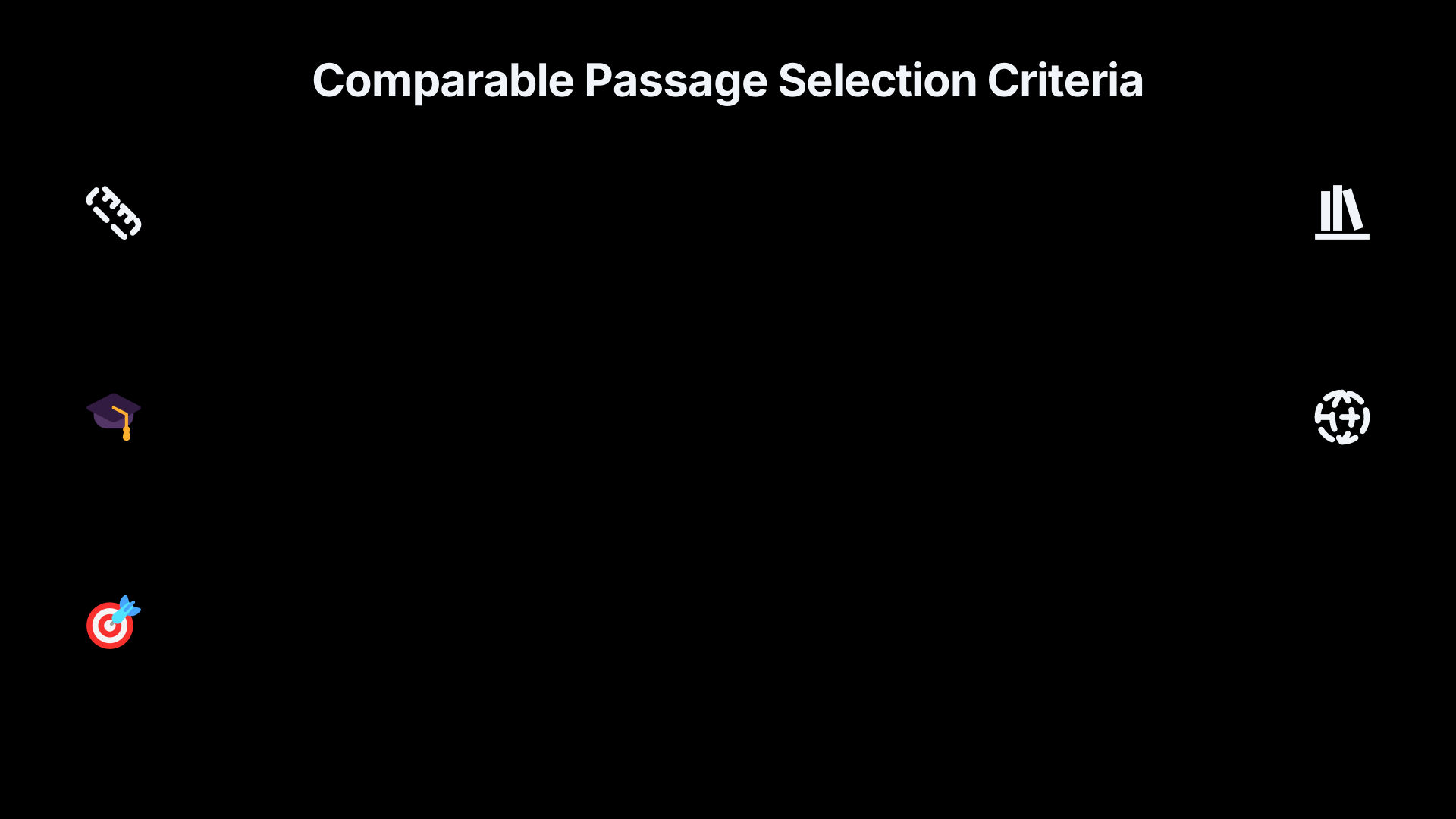
- Length: Similar word counts reduce the effect of unusually short or long passages.
- Genre: Compare fiction with fiction and explanatory non-fiction with explanatory non-fiction.
- Difficulty: Avoid pairing a simple magazine article with a dense academic extract.
- Topic familiarity: Try not to use a subject you know extremely well for one test and an unfamiliar specialist topic for the next.
- Reading purpose: Read both passages for the same goal, such as understanding the main argument rather than searching for facts.[ILA Online Library]ila.onlinelibrary.wiley.comILA Online LibraryAn Exploration of Text Difficulty and Knowledge Support on…6 Mar 2019 — In this study, we explored whether these new…
For personal progress tracking, a small bank of unused passages can be more valuable than repeatedly testing on favourite texts. Many readers rotate through comparable articles, essays, book extracts, or reports and use each passage only once for measurement.
What makes a fair comparison?
Imagine a reader completes a 1,000-word science article and then, two weeks later, a different 1,000-word science article aimed at the same audience. If comprehension remains stable while reading time falls, that result is more convincing than a faster score achieved by rereading the original article.
The key question is not, “Can I read this passage faster now?” but, “Can I read a new passage faster while understanding it just as well?”
That distinction is what turns a practice exercise into a meaningful assessment.
When rereading still helps fluency practice
Avoiding rereading for testing does not mean avoiding it altogether.
Repeated reading remains one of the most studied fluency-building techniques. Research has found that rereading can improve reading rate, accuracy, confidence, and comprehension, particularly when readers receive feedback and practise challenging material multiple times.[Edutopia+3ResearchGate+3PMC]researchgate.netThe author conducted a meta-analysis…Read more…
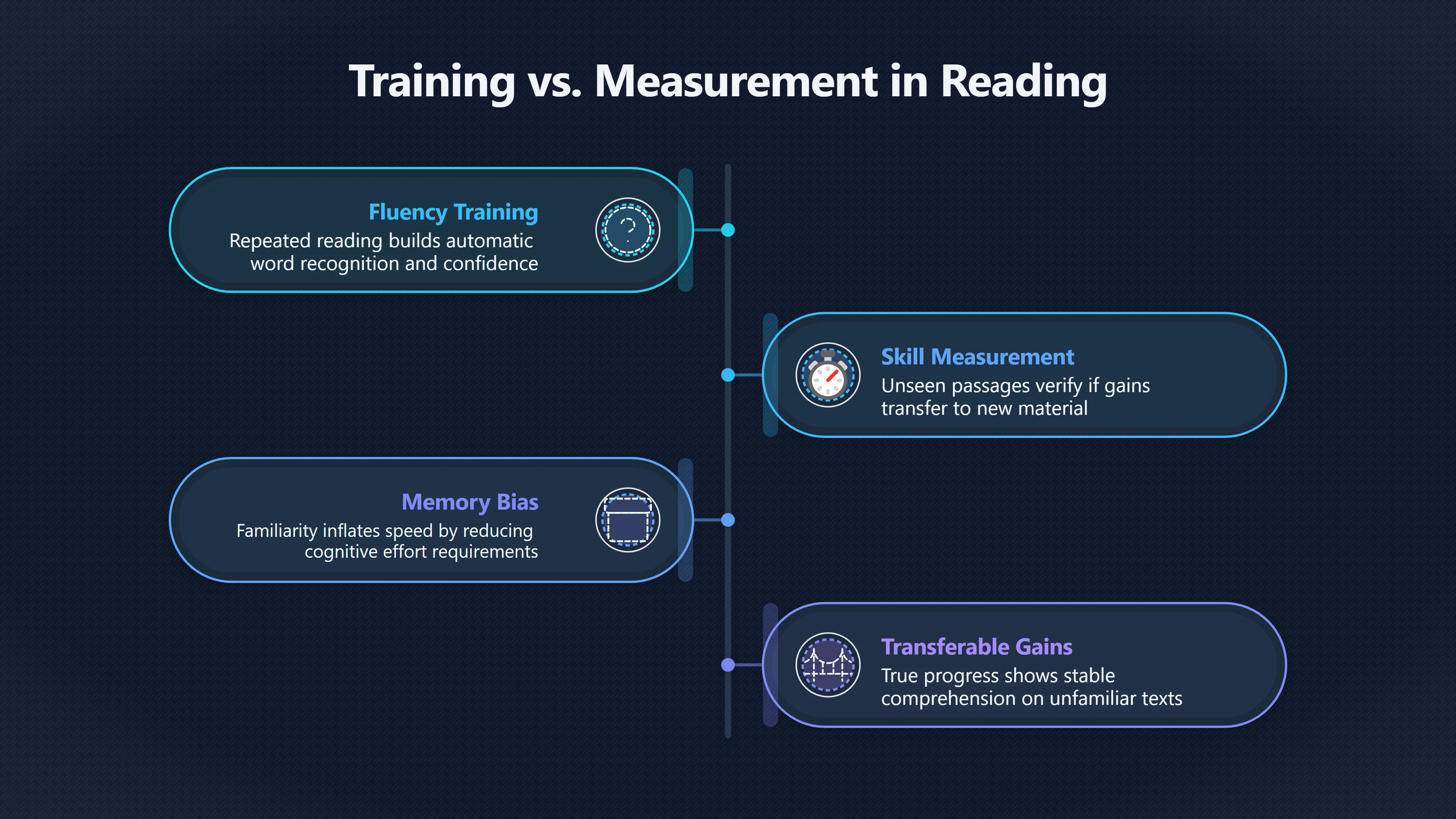
The important distinction is between training and measurement.
For training, rereading can help readers:
- Develop automatic recognition of words and phrases.
- Reduce effort spent on decoding.
- Build smoother, more expressive reading.
- Increase confidence with difficult material.[Shanahan on Literacy+2Reading Rockets]shanahanonliteracy.comShanahan on LiteracyEverything You Wanted to Know about Repeated ReadingRepeated reading usually leads to better oral reading performance…
For measurement, however, the same advantages become sources of bias. A reader may be training effectively through repeated reading while still needing unseen passages to verify that the improvement transfers beyond the practised text.
Research reviews have noted that repeated-reading benefits often appear most strongly on familiar passages, while the crucial question is whether gains generalise to new material. That is precisely why fresh-passage checks remain essential.[PMC+2ResearchGate]pmc.ncbi.nlm.nih.govby EA Stevens · 2016 · Cited by 379 — RR improves fluency and comprehension of familiar texts and may improve fluency and comprehensio…
A simple unseen-text progress check
A practical comprehension-first test can be done in a few minutes:
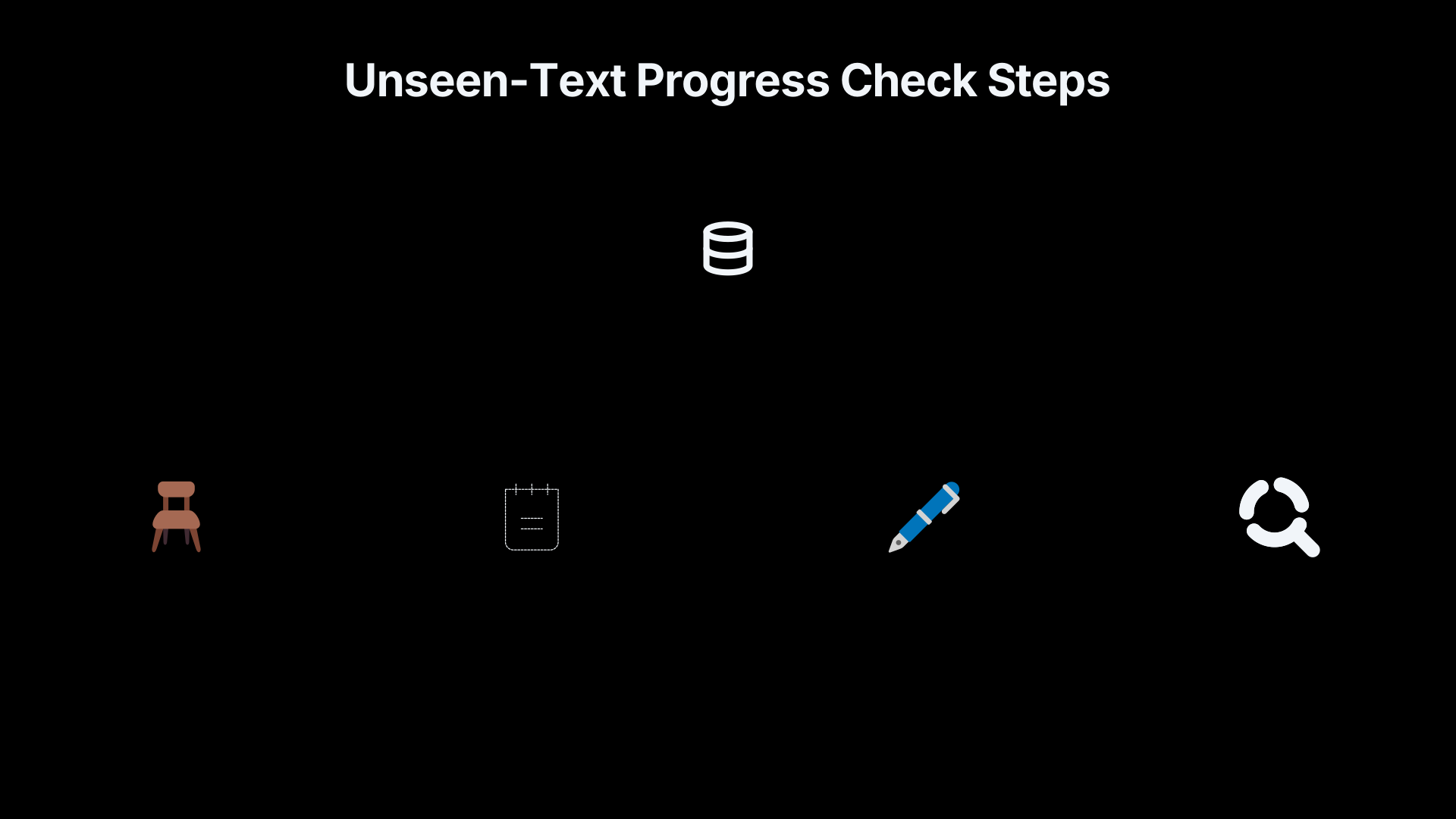
- Select an unseen passage of consistent difficulty and length.
- Read at a natural pace rather than sprinting.
- Record the time and calculate words per minute.
- Write a one-sentence summary of the main idea.
- List several key supporting points or details.
- Answer at least one inference question about the text.
Using multiple forms of comprehension checking is important because no single measure captures understanding perfectly. Research on retelling and recall tasks suggests they are useful indicators but should not be treated as the sole measure of comprehension.[PMC]pmc.ncbi.nlm.nih.govPMCIs Retell a Valid Measure of Reading Comprehension?by Y Cao · 2020 · Cited by 72 — Retell is used widely as a measure of reading comprehension. In this meta-analysis, we evaluated the r…
When the passage is unseen, the resulting score becomes much more trustworthy. Faster reading accompanied by stable comprehension is strong evidence that reading skill—not simple familiarity—is improving.
Amazon book picks
Further Reading
Books and field guides related to Why rereading can fake reading progress. Use these as the next step if you want deeper reading beyond the article.
How to Read a Book
Rating: 4.0/5 from 41 Google Books ratings
Promotes active engagement with unfamiliar texts.
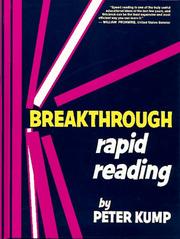
Breakthrough rapid reading
Emphasizes measuring improvement on new material rather than memorized passages.
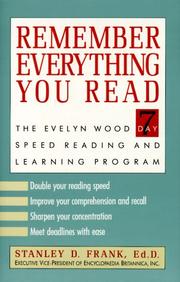
Remember everything you read
Addresses fluency, practice, and reading-performance measurement.
eBay marketplace picks
Marketplace Samples
Example marketplace items related to this page. Use the search link to explore similar finds on eBay.

Endnotes
1.
Source: pmc.ncbi.nlm.nih.gov
Link:https://pmc.ncbi.nlm.nih.gov/articles/PMC5097019/
Source snippet
by EA Stevens · 2016 · Cited by 379 — RR improves fluency and comprehension of familiar texts and may improve fluency and comprehensio...
2.
Source: researchgate.net
Link:https://www.researchgate.net/publication/249835323_Fluency_and_Comprehension_Gains_as_a_Result_of_Repeated_Reading_A_Meta-Analysis
Source snippet
The author conducted a meta-analysis...Read more...
3.
Source: pmc.ncbi.nlm.nih.gov
Link:https://pmc.ncbi.nlm.nih.gov/articles/PMC8500173/
Source snippet
Fluency Interventions for Struggling Readers in Grades 6 to 12by PK Steinle · 2021 · Cited by 47 — Most studies examined repeated read...
4.
Source: edutopia.org
Title: improving elementary students reading ability
Link:https://www.edutopia.org/article/improving-elementary-students-reading-ability/
Source snippet
Empowering Students With Repeated Reading5 Mar 2024 — Teachers can empower students by using repeated reading as an opportunity to offer...
5.
Source: researchgate.net
Link:https://www.researchgate.net/publication/347377977Repeated_Reading_and_Error[Correction
Source snippet
(PDF) Repeated Reading and Error Correction to Improve...Single-subject, multiple-baseline design was used to examine the effect of repe...
6.
Source: pmc.ncbi.nlm.nih.gov
Title: PMCIs Retell a Valid Measure of Reading Comprehension?
Link:https://pmc.ncbi.nlm.nih.gov/articles/PMC7806198/
Source snippet
by Y Cao · 2020 · Cited by 72 — Retell is used widely as a measure of reading comprehension. In this meta-analysis, we evaluated the r...
7.
Source: researchgate.net
Link:https://www.researchgate.net/publication/398253041_Effect_of_Repeated_Reading_for_Developing_Reading_Fluency_and_Reading_Comprehension_in_EFL_Students_Pre_Experimental_Study
Source snippet
(PDF) Effect of Repeated Reading for Developing...29 May 2026 — Based on the results of the study, it was found that repeated reading wa...
Published: May 2026
8.
Source: youtube.com
Title: READ LIKE US: Building Fluency Through Repeated Reading & Challenging Texts
Link:https://www.youtube.com/watch?v=24DPuoljU68
Source snippet
READING COMPREHENSION | UNSEEN PASSAGE | CUET ENGLISH 2026 | FULL EXPLANATION WITH EXAMPLES/PRACTICE...
9.
Source: youtube.com
Link:https://www.youtube.com/watch?v=qwgkK7IxD0g
Source snippet
How Do You Measure Reading Fluency? - Ultimate Study Hacks...
10.
Source: shanahanonliteracy.com
Link:https://www.shanahanonliteracy.com/blog/everything-you-wanted-to-know-about-repeated-reading
Source snippet
Shanahan on LiteracyEverything You Wanted to Know about Repeated ReadingRepeated reading usually leads to better [oral reading]({{ 'reading-aloud/' | relative_url }}) performance...
11.
Source: readingrockets.org
Link:https://www.readingrockets.org/classroom/classroom-strategies/timed-repeated-readings
Source snippet
Timed Repeated ReadingsIt improves reading rate — one aspect of fluency. It improves reading accuracy — a second aspect of fluency; Bette...
12.
Source: tandfonline.com
Link:https://www.tandfonline.com/doi/full/10.1080/02702711.2021.1888348
Source snippet
A critical review was conducted to determine the influence background knowledge has on the reading comprehension of primary school-aged c...
13.
Source: frontiersin.org
Link:https://www.frontiersin.org/journals/education/articles/10.3389/feduc.2025.1666454/full
Source snippet
Impact of familiar cues on reading comprehensionby S Aqdas · 2025 · Cited by 1 — The reason behind these results and performances is the...
14.
Source: ila.onlinelibrary.wiley.com
Link:https://ila.onlinelibrary.wiley.com/doi/10.1002/rrq.247
Source snippet
ILA Online LibraryAn Exploration of Text Difficulty and Knowledge Support on...6 Mar 2019 — In this study, we explored whether these new...
15.
Source: education.qld.gov.au
Link:https://education.qld.gov.au/curriculums/Documents/literature-review.pdf
Source snippet
An overview of the literature effective teaching of readingThe evidence for the effectiveness of phonics instruction is extensive, with p...
16.
Source: ila.onlinelibrary.wiley.com
Link:https://ila.onlinelibrary.wiley.com/doi/full/10.1002/trtr.70024
Source snippet
Fluency Through Challenge: Repeated Reading...by J Downs · 2025 · Cited by 2 — Despite these limitations, research indicates that repeat...
Additional References
17.
Source: arcjournals.org
Link:https://www.arcjournals.org/pdfs/ijhsse/v2-i7/9.pdf
Source snippet
The Effect of Familiarity with Academic Topics on Learner's...The second question investigated the relationship between the effect of th...
18.
Source: publications.waset.org
Link:https://publications.waset.org/15850/the-effect-of-repeated-reading-on-student-fluency-does-practice-always-make-perfect
Source snippet
Effect of Repeated Reading on Student FluencyWe found that, on average, the use of repeated reading strategies increased students- fluenc...
19.
Source: scholarsarchive.byu.edu
Link:https://scholarsarchive.byu.edu/context/facpub/article/8947/viewcontent/5._Immediate_repeated_reading_has_positive_effects_on_reading_rate_for_English_language.pdf
Source snippet
BYU ScholarsArchiveImmediate Repeated Reading Has Positive Effects on...by JH Hansen · 2024 · Cited by 4 — rereading a familiar text hel...
20.
Source: emerald.com
Link:https://www.emerald.com/books/edited-volume/12434/chapter/82607956/Two-Approaches-for-Improving-Reading-Fluency
Source snippet
g., reading slowly and with low prosody, but with few errors) and fluent reading...Read more...
21.
Source: cambridge.org
Link:https://www.cambridge.org/core/journals/studies-in-second-language-acquisition/article/[exposure
Source snippet
EXPOSURE FREQUENCY IN L2 READINGby AA Mohamed · 2018 · Cited by 133 — The present study brings together methods of extensive reading stud...
22.
Source: files.eric.ed.gov
Link:https://files.eric.ed.gov/fulltext/EJ1402236.pdf
Source snippet
ERICThree Dynamic Methods of Assessing the Reading...by AD Mermelstein · 2023 · Cited by 4 — This article offers a brief introduction an...
23.
Source: files.eric.ed.gov
Link:https://files.eric.ed.gov/fulltext/ED531173.pdf
Source snippet
repeated reading as a strategy to improve reading fluencyby K Berg · 2012 · Cited by 31 — The purpose of this action research project rep...
24.
Source: files.eric.ed.gov
Link:https://files.eric.ed.gov/fulltext/EJ797653.pdf
Source snippet
ERICComparison of Repeated Reading and Question Generation...by WJ Therrien · 2008 · Cited by 165 — The results of the study indicate th...
25.
Source: spark.bethel.edu
Link:https://spark.bethel.edu/cgi/viewcontent.cgi?article=2039&context=etd
Source snippet
Readings and Their Impact on Reading Fluencyby SN Olson · 2023 — ' This thesis explains what reading fluency is, how different types of r...
26.
Source: youtube.com
Title: How Do You Measure Reading Fluency?
Link:https://www.youtube.com/watch?v=dBxnIQPQojA
Source snippet
how to solve reading comprehension quickly/reading skills...
Topic Tree