Within Text Profiles
The four records every reader should keep
Four separate profiles for fiction, articles, dense non-fiction, and technical texts make speed records fairer and easier to interpret.

On this page
- Choosing categories that match real reading purposes
- What to record beyond words per minute
- How to review trends across profiles
Page outline Jump by section
Introduction
A single reading-speed number is rarely useful for someone trying to increase reading speed. The reason is simple: different kinds of text demand different kinds of thinking. A novel encourages continuous narrative processing, while a technical paper may require frequent checking of definitions, diagrams, or logical relationships. Research reviews consistently find that reading rates vary by text type, with fiction generally read faster than non-fiction and more complex material reducing fluency and recall when readers try to maintain the same pace.[ResearchGate+2Biblio]researchgate.netResearch Gate(PDF) How many words do we read per minute?A review…15 Aug 2019 — We estimate that the average silent reading rate for adults in English is 238 words per minute (wpm) for non-fi…
 The solution is to keep four separate reading-speed profiles rather than one overall record. By tracking fiction, general articles, dense non-fiction, and technical texts independently, you create benchmarks that reflect real reading purposes. This makes progress easier to interpret and prevents slow, careful study reading from unfairly lowering an overall score.
Choosing categories that match real reading purposes
The most effective profiles are built around why you read, not around arbitrary difficulty labels.
A practical four-profile system looks like this:
ProfileTypical materialPrimary goalFictionNovels, short stories, narrative non-fictionFollow narrative smoothlyArticlesNews, magazines, blogs, popular scienceGather information efficientlyDense non-fictionHistory, philosophy, academic books, analytical essaysUnderstand arguments and evidenceTechnical textsTextbooks, manuals, scientific papers, professional documentationAccurate comprehension and application
These categories work because they reflect distinct cognitive demands.
Fiction often allows faster reading because story structure, character continuity, and contextual clues help readers predict meaning. Non-fiction tends to contain longer words and denser information, contributing to slower average rates. A large review of 190 studies estimated average silent reading rates of approximately 260 words per minute for fiction and 238 words per minute for non-fiction, while also noting substantial variation between individuals.[ResearchGate]researchgate.netResearch Gate(PDF) How many words do we read per minute?A review…15 Aug 2019 — We estimate that the average silent reading rate for adults in English is 238 words per minute (wpm) for non-fi…
Dense non-fiction deserves its own profile because argument-heavy writing creates a different challenge from ordinary informational reading. Technical texts deserve a separate profile because comprehension often depends on specialised vocabulary, formulas, diagrams, or procedural accuracy rather than continuous prose alone.
The goal is not to create perfect academic categories. The goal is to create categories that remain stable over time so that each record compares like with like.
What to record beyond words per minute
Words per minute should be only one part of each profile.
Readers often see apparent speed improvements that disappear once comprehension is measured. Research on comprehension monitoring and self-regulated reading shows that effective readers continually evaluate whether understanding is keeping pace with reading.[Reading Universe+2EEF]readinguniverse.orgReading UniverseComprehension Monitoring Skill ExplainerComprehension monitoring is a process readers use before, during, and after readi…
For each reading session, record:
- Words per minute.[semanticscholar.org]semanticscholar.orgSemantic Scholar How many words do we read per minute?A review and…Based on the analysis of 190 studies (18573 participants), we estimate that the average silent reading rate for adults in…
- A simple comprehension score.
- The source or title of the text.
- Familiarity with the subject.
- Reading purpose.
- Notes about unusual difficulty.
A comprehension score does not need to be elaborate. After finishing, write three to five key points from memory and estimate how much was retained. A simple 1–5 scale is often enough.
For example:
MetricExampleProfileDense non-fictionWPM205Comprehension4/5Subject familiarityModeratePurposeStudyNotesComplex chapter with many references
This approach helps distinguish genuine improvement from easier material. A rise in speed accompanied by stable comprehension is meaningful. A rise in speed accompanied by declining recall may simply indicate rushing.
Building the first baseline for each profile
Many readers already have enough material at home to establish their profiles.
Choose three unseen samples for each category. Aim for sessions of roughly 10–20 minutes so that temporary fluctuations have less impact on the result.
For each sample:
- Measure reading time.[britetodo.com]britetodo.comreading time calculatorHow Long to Read Any TextThe average adult reads approximately 238 words per minute (wpm) according to a 2019 meta-analysis by Brysbaert…
- Calculate words per minute.
- Complete a brief comprehension check.
- Record the results.
- Average the three sessions.
The average becomes your baseline.
Avoid mixing categories during baseline testing. A magazine article that explains a scientific concept belongs in the articles profile if the writing is intended for a general audience. A peer-reviewed research paper belongs in the technical profile even if the topic is familiar.
The objective is consistency rather than perfect classification.
How to review trends across profiles
Separate profiles become valuable when they reveal different patterns of progress.
Imagine a reader tracking results for six months:
ProfileStarting WPMCurrent WPMFiction250290Articles220260Dense non-fiction180205Technical texts145150
A single combined score would suggest modest overall improvement. The profile view tells a more useful story.
The reader has become substantially faster with narrative and informational reading while remaining relatively unchanged with technical material. That insight points directly to the next area for improvement.
It also prevents misinterpretation. Technical reading often requires deliberate slowing, careful rereading, and active comprehension monitoring. Research on text complexity shows that increasing complexity can reduce fluency and recall, making slower reading entirely appropriate in some contexts.[Springer Link+2PubMed]link.springer.comSpringer LinkUnderstanding the influence of text complexity and question…9 Jul 2018 — Text complexity negatively impacted reading outc…
When reviewing trends:
- Compare each profile only against its own history.
- Prioritise comprehension stability over raw speed gains.
- Look for long-term averages rather than individual sessions.
- Note changes in subject familiarity that may influence results.
A reader whose technical-text speed remains stable while comprehension improves may have made more meaningful progress than someone whose fiction speed rises sharply.
Common mistakes when creating reading-speed profiles
The most common error is treating all non-fiction as one category. This combines easy informational reading with highly demanding study material and obscures meaningful patterns.
Other frequent mistakes include:
- Using familiar texts for testing.
- Ignoring comprehension.
- Changing category definitions repeatedly.
- Comparing technical reading speeds with fiction speeds.[sasc.org.uk]sasc.org.ukate 183 wpm. • Based on 77 studies with 5965 participants.Read more…
- Drawing conclusions from one unusually easy or difficult session.
Another mistake is assuming every profile should improve at the same rate. Different reading goals justify different speeds. A legal contract, scientific paper, or software manual often rewards careful analysis rather than rapid movement through the text.

The four records every reader should keep
The purpose of separate reading-speed profiles is not to generate more statistics. It is to create fair comparisons.
A fiction profile measures how efficiently you move through narrative material. An articles profile reflects everyday information gathering. A dense non-fiction profile tracks your ability to process complex arguments. A technical profile measures careful understanding of specialised material.
Together, these four records provide a much clearer picture of reading development than any single words-per-minute score. Instead of asking whether you are reading faster overall, you can identify exactly where speed, comprehension, and confidence are improving—and where slower reading may actually be the correct strategy.
Amazon book picks
Further Reading
Books and field guides related to The four records every reader should keep. Use these as the next step if you want deeper reading beyond the article.
How to Read a Book
Rating: 4.0/5 from 41 Google Books ratings
Explains different approaches for different text types and reading purposes.
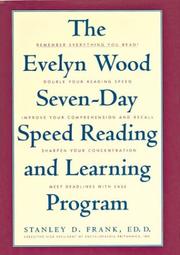
The Evelyn Wood Seven-Day Speed Reading and Learning Program
Provides structured reading-speed tracking and practice methods.
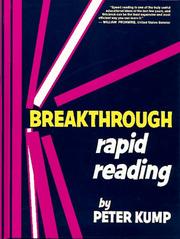
Breakthrough rapid reading
Focuses on measuring and improving reading speed across materials.

How to read literature like a professor
Supports the idea that different text categories require different reading approaches.
eBay marketplace picks
Marketplace Samples
Example marketplace items related to this page. Use the search link to explore similar finds on eBay.
Endnotes
1.
Source: researchgate.net
Title: Research Gate(PDF) How many words do we read per minute?
Link:https://www.researchgate.net/publication/335174808_How_many_words_do_we_read_per_minute_A_review_and_meta-analysis_of_reading_rate
Source snippet
A review...15 Aug 2019 — We estimate that the average silent reading rate for adults in English is 238 words per minute (wpm) for non-fi...
2.
Source: link.springer.com
Link:https://link.springer.com/article/10.1007/s11145
Source snippet
Springer LinkUnderstanding the influence of text complexity and question...9 Jul 2018 — Text complexity negatively impacted reading outc...
3.
Source: educationendowmentfoundation.org.uk
Link:https://educationendowmentfoundation.org.uk/reading-house/comprehension-monitoring
Source snippet
Comprehension monitoringThe process in which readers determine whether they understand and can articulate what they are reading.Read more...
4.
Source: link.springer.com
Link:https://link.springer.com/article/10.1007/s11409-025-09440-2
Source snippet
Springer LinkReading behavior as an indicator of comprehension...by C Tibken · 2025 · Cited by 2 — Processes of metacomprehension, inclu...
5.
Source: researchgate.net
Link:https://www.researchgate.net/publication/326270424_Understanding_the_Influence_of_Text_Complexity_and_Question_Type_on_Reading_Outcomes
Source snippet
Understanding the Influence of Text Complexity and...9 Jul 2018 — Text complexity negatively affects reading outcomes, particularly oral...
6.
Source: researchgate.net
Title: 398920292 Evaluating Reading Speed and Comprehension in the Digital Era
Link:https://www.researchgate.net/publication/398920292_Evaluating_Reading_Speed_and_Comprehension_in_the_Digital_Era
Source snippet
(PDF) Evaluating Reading Speed and Comprehension in...1 Jan 2026 — This systematic literature review (SLR) thoroughly investigates the u...
7.
Source: researchgate.net
Title: (PDF) How many words do we read per minute?
Link:https://www.researchgate.net/publication/332380784_How_many_words_do_we_read_per_minute_A_review_and_meta-analysis_of_reading_rate
Source snippet
A review...by M Brysbaert · Cited by 864 — We estimate that the average silent reading rate for adults in English is 238 word per minute...
8.
Source: biblio.ugent.be
Title: Biblio How many words do we read per minute?
Link:https://biblio.ugent.be/publication/8647789
Source snippet
A review and meta...by M Brysbaert · 2019 · Cited by 830 — For silent reading of English non-fiction most adults fall in the range of 17...
9.
Source: readinguniverse.org
Link:https://readinguniverse.org/skill-explainer/critical-thinking-strategies-2/comprehension-monitoring-skill-explainer/overview-of-comprehension-monitoring
Source snippet
Reading UniverseComprehension Monitoring Skill ExplainerComprehension monitoring is a process readers use before, during, and after readi...
10.
Source: pubmed.ncbi.nlm.nih.gov
Link:https://pubmed.ncbi.nlm.nih.gov/30983698/
Source snippet
the Influence of Text Complexity and Question...by M Spencer · 2019 · Cited by 100 — Text complexity negatively impacted reading outcome...
11.
Source: britetodo.com
Title: reading time calculator
Link:https://britetodo.com/tools/en/reading-time-calculator
Source snippet
How Long to Read Any TextThe average adult reads approximately 238 words per minute (wpm) according to a 2019 meta-analysis by Brysbaert...
Additional References
12.
Source: nwea.org
Title: how to address text complexity and help students understand what they read
Link:https://www.nwea.org/blog/2025/how-to-address-text-complexity-and-help-students-understand-what-they-read/
Source snippet
How to address text complexity and help students...4 Dec 2025 — Understanding what constitutes text complexity is the first step in help...
13.
Source: aimcoaching.org
Link:https://aimcoaching.org/wp-content/uploads/2021/12/Teacher_Flyer_SRR.pdf
Source snippet
• Have students track or graph their comprehension of texts and discuss what caused...Read more...
14.
Source: scispace.com
Link:https://scispace.com/papers/understanding-the-influence-of-text-complexity-and-question-1grrl51jn9
Source snippet
lexity negatively impacted reading outcomes, particularly [oral reading]({{ 'reading-aloud/' | relative_url }}) fluency and...Read more...
15.
Source: facebook.com
Title: text complexity affects elementary students’ reading fluency
Link:https://www.facebook.com/groups/1120922196519412/posts/1197849355493362/
Source snippet
reading outcomes (oral reading fluency, reading comprehension, free recall). They found that increased text complexity negatively impacte...
16.
Source: medium.com
Title: read faster using science use these 3 tips bd94605f3faf
Link:https://medium.com/%40axel.em.casas/read-faster-using-science-use-these-3-tips-bd94605f3faf
Source snippet
Read Faster Using Science (Use These 3 Tips)Well, 300 words per minute (wpm). Brysbaert (2019) found that this figure is cited across stu...
17.
Source: semanticscholar.org
Title: Semantic Scholar How many words do we read per minute?
Link:https://www.semanticscholar.org/paper/How-many-words-do-we-read-per-minute-A-review-and-Brysbaert/35bf5854514ee63095a6a3dc4a7bdaa2eb18929f
Source snippet
A review and...Based on the analysis of 190 studies (18573 participants), we estimate that the average silent reading rate for adults in...
18.
Source: textproject.org
Title: Does Text Complexity Matter in the Elementary Grades?
Link:https://textproject.org/wp-content/uploads/2022/07/Amendum-et-al.pdf
Source snippet
SJ Amendum · 2017 · Cited by 209 — An investigation of the effects of passage difficulty level on outcomes of oral reading fluenc...
19.
Source: wsra.org
Title: This article describes their unique needs and proposes three critical.Read more
Link:https://www.wsra.org/assets/Conference/Conference_2026/Handouts/Th-B02%20Anderson.pdf
Source snippet
Finding versus fixing: self-monitoring for readers who...2017 · Cited by 21 — Readers who struggle with literacy learning must learn to...
20.
Source: sasc.org.uk
Link:https://www.sasc.org.uk/media/4d4lsrfv/assessing-reading-and-writing-speeds-presentation-june-2020.pdf
Source snippet
ate 183 wpm. • Based on 77 studies with 5965 participants.Read more...
21.
Source: igi-global.com
Title: mark promoting self monitoring reading
Link:https://www.igi-global.com/chapter/mark-promoting-self-monitoring-reading/47161
Source snippet
Mark-UP: Promoting Self-Monitoring of Reading...by M McMahon · 2011 — This chapter describes the development of and research into an env...
Topic Tree