Within Email triage
Why blunt emails slow good readers down
Complaints, HR messages, money discussions, and blunt wording need slower reading because misunderstandings can be costlier than delay.
On this page
- Separating facts from emotional concerns
- Money and HR details that change consequences
- When a fast reply creates more work
Page outline Jump by section
Introduction
Fast email reading is useful until the cost of being wrong becomes higher than the cost of being slow. Tone-sensitive emails sit in that category. Complaints, HR discussions, money matters, performance concerns, and unusually blunt messages often contain both factual information and emotional signals. Reading them at normal triage speed can create errors because written communication lacks facial expressions, vocal tone, and immediate clarification. Research has repeatedly found that recipients tend to misread emotional intent in email and often perceive messages as more negative than senders intended.[Academy of Management Journals+2PubMed]journals.aom.orgAcademy of Management Journals Carrying too Heavy a Load?The Communication and…by K Byron · 2008 · Cited by 661 — Email characteristics make miscommunication likely, and I argue that receiver…
 For people trying to increase reading speed, the lesson is not that every email deserves close study. It is that certain emails should trigger a deliberate slowdown. Skilled email triage depends as much on recognising risk as on reading quickly.
Why blunt emails slow good readers down
A common mistake is assuming that fast readers should process all messages at roughly the same pace. In practice, experienced professionals often do the opposite. The more emotionally charged an email appears, the more carefully they read it.
Research on workplace email communication suggests that receivers frequently interpret messages as more emotionally negative than intended, especially when the message is brief, ambiguous, or lacks contextual cues. The absence of vocal inflection, facial expression, and body language creates room for projection and misunderstanding.[Academy of Management Journals+2ResearchGate]journals.aom.orgAcademy of Management Journals Carrying too Heavy a Load?The Communication and…by K Byron · 2008 · Cited by 661 — Email characteristics make miscommunication likely, and I argue that receiver…
A short message such as “We need to discuss this” can be interpreted as:
- A routine request for clarification.
- A sign of frustration.
- A warning about poor performance.
- A precursor to formal escalation.
The words remain identical, but the perceived meaning changes depending on the reader’s assumptions. That uncertainty is precisely why tone-sensitive emails deserve slower reading.
Studies of email communication have also found that senders are often overconfident about their ability to convey tone accurately. People believe their intended emotion will be obvious to readers when, in reality, recipients frequently miss or reinterpret it.[PubMed+2Stern Web Docs]pubmed.ncbi.nlm.nih.govEgocentrism over e-mail: can we communicate as well as…by J Kruger · 2005 · Cited by 799 — Without the benefit of paralinguistic…
Separating facts from emotional concerns
When a message feels hostile, disappointed, or unusually direct, the fastest safe approach is not to respond immediately. It is to separate objective content from emotional interpretation.
A useful mental distinction is:
Facts
- Deadlines.
- Requests.
- Decisions.
- Policy references.
- Specific incidents.
Emotional concerns
- Perceived irritation.
- Disappointment.
- Frustration.
- Sarcasm.
- Passive aggression.
These often become mixed together during rapid reading. A recipient may remember feeling criticised while overlooking the actual request hidden inside the message.
Research into negative email interpretation has documented a tendency for recipients to intensify negativity beyond what was written, a phenomenon sometimes described as a negative interpretation bias.[Sage Journals]journals.sagepub.comParticipants identified examples of negatively perceived emails received from…Read more…
For example, a complaint email may contain three separate layers:

- A concrete problem.
- The sender’s frustration about the problem.
- A request for resolution.
The third layer is usually the operationally important one. Fast reading often locks onto the second layer and misses the action required.
Slowing down helps readers identify what must be addressed versus what merely reflects emotion.
Money and HR details that change consequences
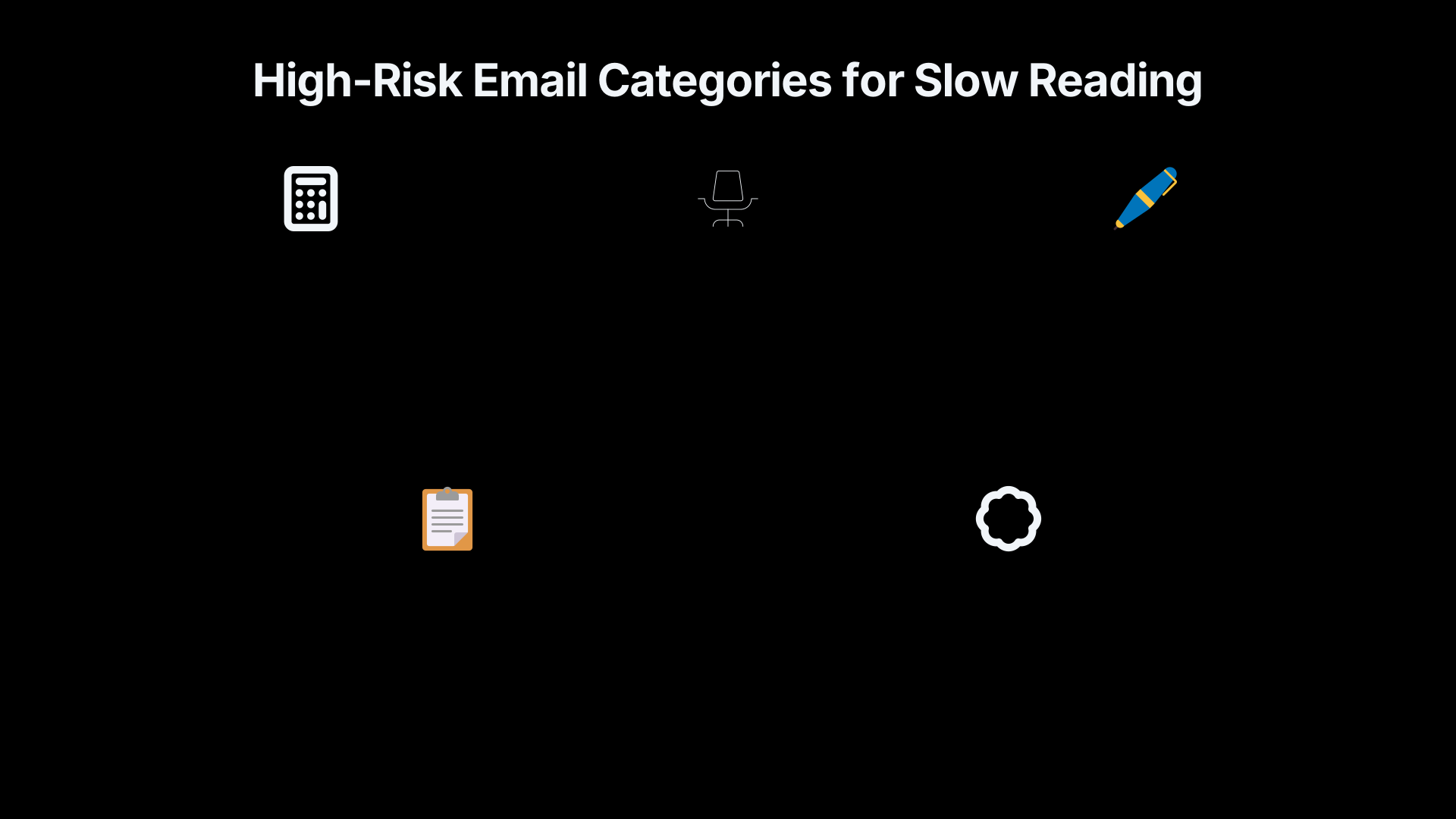
Not all misunderstandings carry equal risk. Tone-sensitive emails involving money, employment matters, contracts, performance reviews, complaints, or compliance issues deserve special treatment because the consequences of misreading them can persist long after the conversation ends.
A finance-related email may contain wording that feels accusatory when the actual issue is a bookkeeping discrepancy. An HR message may appear threatening when it is primarily procedural. Conversely, a polite message may contain significant legal, contractual, or disciplinary implications that become visible only through careful reading.
These categories reward deliberate reading because important details are often embedded in seemingly routine language:
- Payment deadlines.
- Expense disputes.
- Contract amendments.
- Performance concerns.
- Investigation requests.
- Policy references.
- Documentation requirements.
The emotional tone may attract attention first, but the lasting consequences usually arise from the factual details.
Workplace communication experts frequently note that misunderstandings about tone can escalate into formal disputes, complaints, and damaged professional relationships when participants react to perceived intent rather than documented content.[SHRM+2Pollack Peacebuilding Systems]shrm.orgemail communication conflict8 Tips for Avoiding Conflict in Email2 Feb 2024 — Much of the conflict in workplaces plays out over email and text, often due to misu…
When a fast reply creates more work
One reason tone-sensitive emails deserve slower reading is that a rushed response often generates additional correspondence.
A reader who reacts immediately may:
- Defend against criticism that was never intended.
- Ignore a legitimate concern.
- Escalate conflict unnecessarily.[journalism.university]journalism.universitydealing with conflict emails professional resolutionDealing with Conflict in Emails: Strategies for Professional…4 Dec 2025 — Learn how to professionally manage email conflicts: de-escal…
- Miss a requested action.
- Create a longer clarification thread.
Recent workplace reporting has highlighted how unclear or misread written communication can consume significant time through follow-up explanations, damaged relationships, and even HR involvement.[IT Pro]itpro.comThe research reveals that 87% of employees waste an average of five hours per week clarifying unclear messages, while 83% report instance…
The irony is that reading an email thirty seconds faster can create hours of additional communication later. In these situations, slowing down is not the opposite of efficiency. It is a form of efficiency.
A practical test is simple: if the message triggers an immediate emotional reaction, assume the first interpretation may be incomplete. Read it again looking only for facts, commitments, and requested actions. Then decide whether the apparent tone changes the response required.
The reading-speed exception that improves overall speed
Most inbox messages benefit from rapid triage. Tone-sensitive emails are an exception because the main risk is not missing information; it is misinterpreting meaning.
Research on email communication consistently shows that the lack of non-verbal cues increases ambiguity and makes emotional intent harder to judge. At the same time, recipients often become more confident in their interpretations than the evidence justifies.[PubMed+2Stern Web Docs]pubmed.ncbi.nlm.nih.govEgocentrism over e-mail: can we communicate as well as…by J Kruger · 2005 · Cited by 799 — Without the benefit of paralinguistic…
For readers focused on increasing reading speed, this creates a useful rule: read routine emails quickly, but slow down whenever misunderstanding could be more expensive than delay. Complaints, HR discussions, payment issues, contract questions, and unusually blunt messages rarely reward speed alone. They reward accuracy. In those cases, a slower first reading is often the fastest route to a correct outcome.
Amazon book picks
Further Reading
Books and field guides related to Why blunt emails slow good readers down. Use these as the next step if you want deeper reading beyond the article.
Difficult Conversations
Explains how emotion and perception affect communication, directly relevant to tone-sensitive emails.
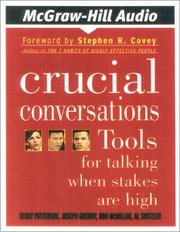
Crucial Conversations
Directly addresses emotionally charged communication, misunderstandings, and high-stakes responses.

Thanks for the Feedback
Helps readers interpret criticism, complaints, and emotionally loaded messages accurately.

Never Split the Difference
Teaches careful interpretation of language, emotional cues, and high-stakes written exchanges.
eBay marketplace picks
Marketplace Samples
Example marketplace items related to this page. Use the search link to explore similar finds on eBay.




Endnotes
1.
Source: researchgate.net
Title: Research Gate Carrying too Heavy a Load?
Link:https://www.researchgate.net/publication/252671620_Carrying_too_Heavy_a_Load_The_Communication_and_Miscommunication_of_Emotion_by_Email
Source snippet
The Communication and...Email characteristics make miscommunication likely, and I argue that receivers often misinterpret work emails as...
2.
Source: researchgate.net
Link:https://www.researchgate.net/publication/347606615_Hypernegative_Interpretation_of_Negatively_Perceived_Email_at_Work
Source snippet
Hypernegative Interpretation of Negatively Perceived Email...Some research even highlights a tendency for email recipients to interpret...
3.
Source: shrm.org
Title: email communication conflict
Link:https://www.shrm.org/mena/topics-tools/news/employee-relations/email-communication-conflict
Source snippet
8 Tips for Avoiding Conflict in Email2 Feb 2024 — Much of the conflict in workplaces plays out over email and text, often due to misu...
4.
Source: researchgate.net
Link:https://www.researchgate.net/publication/397463588_Beyond_the_Screen_Re-evaluating_Non-Verbal_Cues_in_Digital-Age_Communication
Source snippet
(PDF) Beyond the Screen: Re-evaluating Non-Verbal Cues...14 Nov 2025 — Findings confirmed that this "non-verbal cue gap" contributes to...
5.
Source: journals.aom.org
Title: Academy of Management Journals Carrying too Heavy a Load?
Link:https://journals.aom.org/doi/10.5465/AMR.2008.31193163
Source snippet
The Communication and...by K Byron · 2008 · Cited by 661 — Email characteristics make miscommunication likely, and I argue that receiver...
6.
Source: pubmed.ncbi.nlm.nih.gov
Link:https://pubmed.ncbi.nlm.nih.gov/16393025/
Source snippet
Egocentrism over e-mail: can we communicate as well as...by J Kruger · 2005 · Cited by 799 — Without the benefit of paralinguistic...
7.
Source: web-docs.stern.nyu.edu
Title: kruger email ego
Link:https://web-docs.stern.nyu.edu/pa/kruger_email_ego.pdf
Source snippet
Stern Web DocsEgocentrism Over E-Mail: Can We Communicate as Well...by J Kruger · 2005 · Cited by 821 — Because we observed greater over...
8.
Source: journals.sagepub.com
Link:https://journals.sagepub.com/doi/10.1177/0893318920979828
Source snippet
Participants identified examples of negatively perceived emails received from...Read more...
9.
Source: pollackpeacebuilding.com
Title: managing email based conflicts
Link:https://pollackpeacebuilding.com/blog/managing-email-based-conflicts/
Source snippet
Pollack Peacebuilding SystemsManaging Email-Based Conflicts16 Jul 2024 — Conflicts usually occur in emails because messages, or the tone...
10.
Source: itpro.com
Link:https://www.itpro.com/software/business-apps/watch-your-tone-at-work-atlassian-warns-poor-communication-and-blunt-messages-are-confusing-colleagues-and-its-having-a-serious-impact-on-productivity
Source snippet
The research reveals that 87% of employees waste an average of five hours per week clarifying unclear messages, while 83% report instance...
11.
Source: pmc.ncbi.nlm.nih.gov
Title: PMCFurther Understanding Active and Passive Email Incivility
Link:https://pmc.ncbi.nlm.nih.gov/articles/PMC8362923/
Source snippet
Understanding Active and Passive Email Incivility - PMCby Z Yuan · 2020 · Cited by 48 — Moreover, the lack of nonverbal cues and delayed...
12.
Source: play.google.com
Link:https://play.google.com/store/apps/details?hl=en&id=com.google.android.gm
Source snippet
Apps on Google PlayConnect, create, and collaborate with Gmail, Use the power of Google AI to help you write, organize, search, and clear...
13.
Source: pmc.ncbi.nlm.nih.gov
Link:https://pmc.ncbi.nlm.nih.gov/articles/PMC7296417/
Source snippet
Use Reconsidered in Health Professions Education - PMCby JC De Gagne · 2020 · Cited by 20 — This paper examines the challenges and opport...
14.
Source: Wikipedia
Link:https://en.wikipedia.org/wiki/Email
Source snippet
EmailElectronic mail (usually shortened to email; is a method of transmitting and receiving digital messages using electronic devices...
Additional References
15.
Source: target.com
Link:https://www.target.com/b/tone/-/N-q643lengdhu
Source snippet
TONE products at TargetShop Tone body wash and skincare at Target for refreshing scents and quality ingredients that nourish your skin. F...
16.
Source: sites.psu.edu
Link:https://sites.psu.edu/aspsy/2024/10/27/youve-got-mail-and-so-much-morethe-pitfalls-of-digital-communication-why-tone-matters-in-the-email-age/
Source snippet
Tone Matters in the Email Age27 Oct 2024 — Without nonverbal cues, it's easy to misinterpret someone's tone or intent, creating misunders...
17.
Source: linkedin.com
Link:https://www.linkedin.com/pulse/message-you-meant-never-arrived-how-email-text-fuel-workplace-best-wjgpc
18.
Source: evidencebasedmentoring.org
Link:https://www.evidencebasedmentoring.org/mentoring-and-egocentrism-do-people-overestimate-their-ability-to-provide-emotional-support-over-email/
Source snippet
Mentoring and Egocentrism: Do people overestimate their...24 Mar 2015 — Introduction: Kruger, Epley, Parker, & Ng (2005) conducted five...
19.
Source: acas.org.uk
Title: ditching vague language essential to resolving workplace conflict
Link:https://www.acas.org.uk/ditching-vague-language-essential-to-resolving-workplace-conflict
Source snippet
Ditching vague language essential to resolving workplace...30 Jun 2025 — Replacing vague [phrases]({{ 'phrases/' | relative_url }}) with clearer language is essential to i...
20.
Source: nepjol.info
Link:https://nepjol.info/index.php/awadharana/article/download/86198/65611/247103
Source snippet
because it removes most non-verbal cues, which often lead to misunderstandings (Pfeil &...Read more...
21.
Source: research.tilburguniversity.edu
Link:https://research.tilburguniversity.edu/en/publications/i-get-u-people-correctly-interpret-the-tone-of-text-messages-and-
Source snippet
People correctly interpret the tone of text...This shows that, in the context of everyday text messages and emails, people are able to c...
22.
Source: journalism.university
Title: dealing with conflict emails professional resolution
Link:https://journalism.university/vocational-skills/dealing-with-conflict-emails-professional-resolution/
Source snippet
Dealing with Conflict in Emails: Strategies for Professional...4 Dec 2025 — Learn how to professionally manage email conflicts: de-escal...
23.
Source: hbs.edu
Link:https://www.hbs.edu/faculty/Pages/item.aspx?num=58557
Source snippet
r's emotions—both negative (Studies 1A–2, 4, 5) and positive (Study 3).Read more...
24.
Source: brandeis.edu
Link:https://www.brandeis.edu/ombuds/self-help/email-rules.html
Source snippet
Email Rules of Engagement | Self-Help ResourcesRemember two facts: 44% of emails are misunderstood and 93% of communication is non-verbal...
Topic Tree