Within Visual span
The Experiment That Shrinks Speed Reading Claims
Moving-window experiments show how much text readers actually use around each fixation and why whole-line reading claims fail.
On this page
- How the moving window hides text during reading
- What happens when the visible span gets smaller
- Why the results challenge whole line promises
Page outline Jump by section
Introduction
One of the strongest tests of speed-reading claims comes from a deceptively simple eye-tracking method known as the moving-window experiment. Rather than asking readers what they think they can see, researchers control exactly how much text is visible around each eye fixation and measure what happens to reading performance. The results provide a direct test of whether readers can genuinely process entire lines or large blocks of text at once. Decades of moving-window studies have consistently found that readers rely on a limited region of useful visual information around the point of fixation. When that region is preserved, reading proceeds normally; when it is reduced, reading slows markedly. These findings are among the most important pieces of evidence against claims that skilled readers routinely absorb whole lines or pages in a single glance.[ResearchGate]researchgate.netThe gaze-contingent moving window in readingReading involves allocating attention across the text, and the size of this span…
The Experiment That Shrinks Speed-Reading Claims
How the moving window hides text during reading
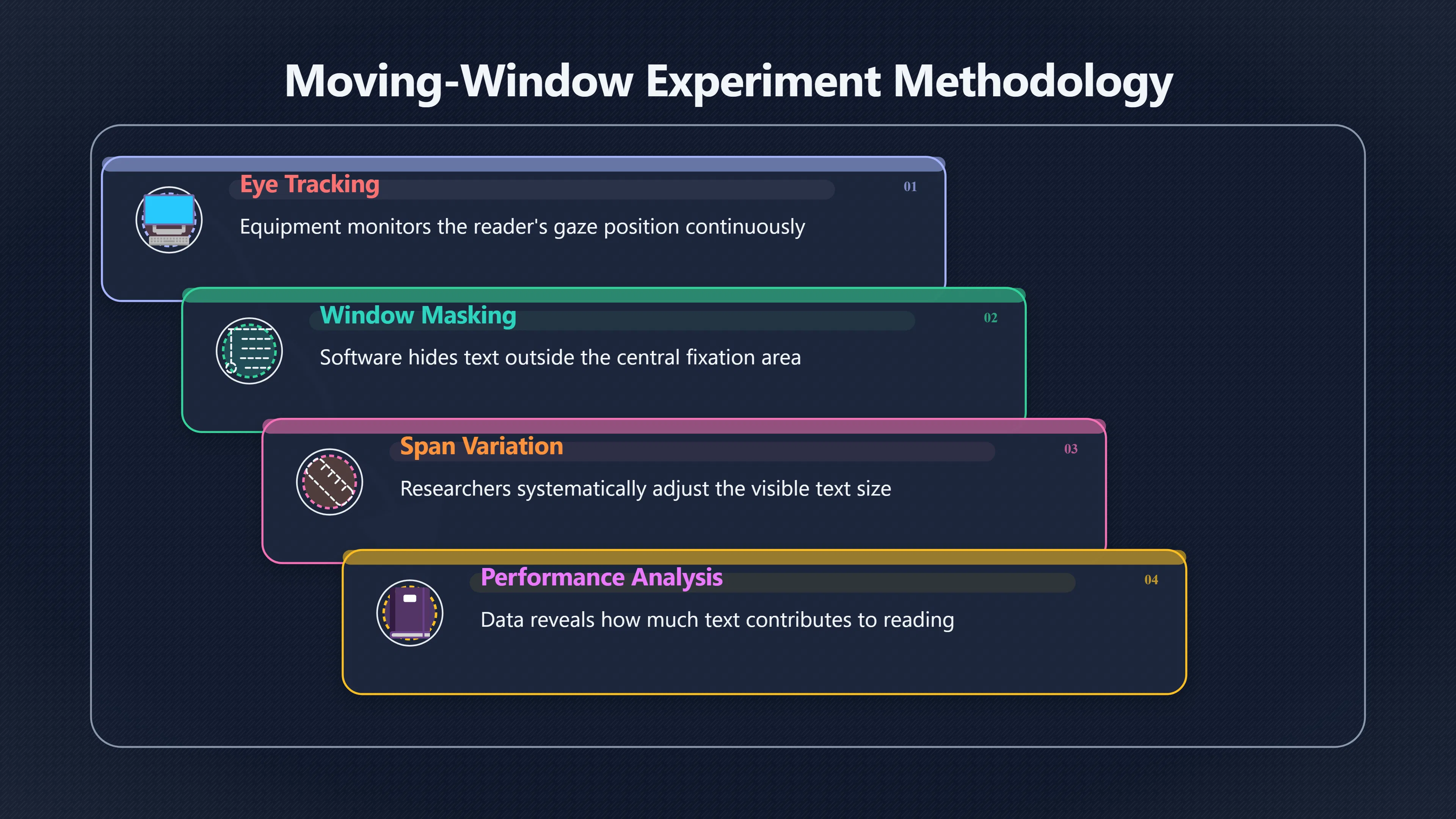
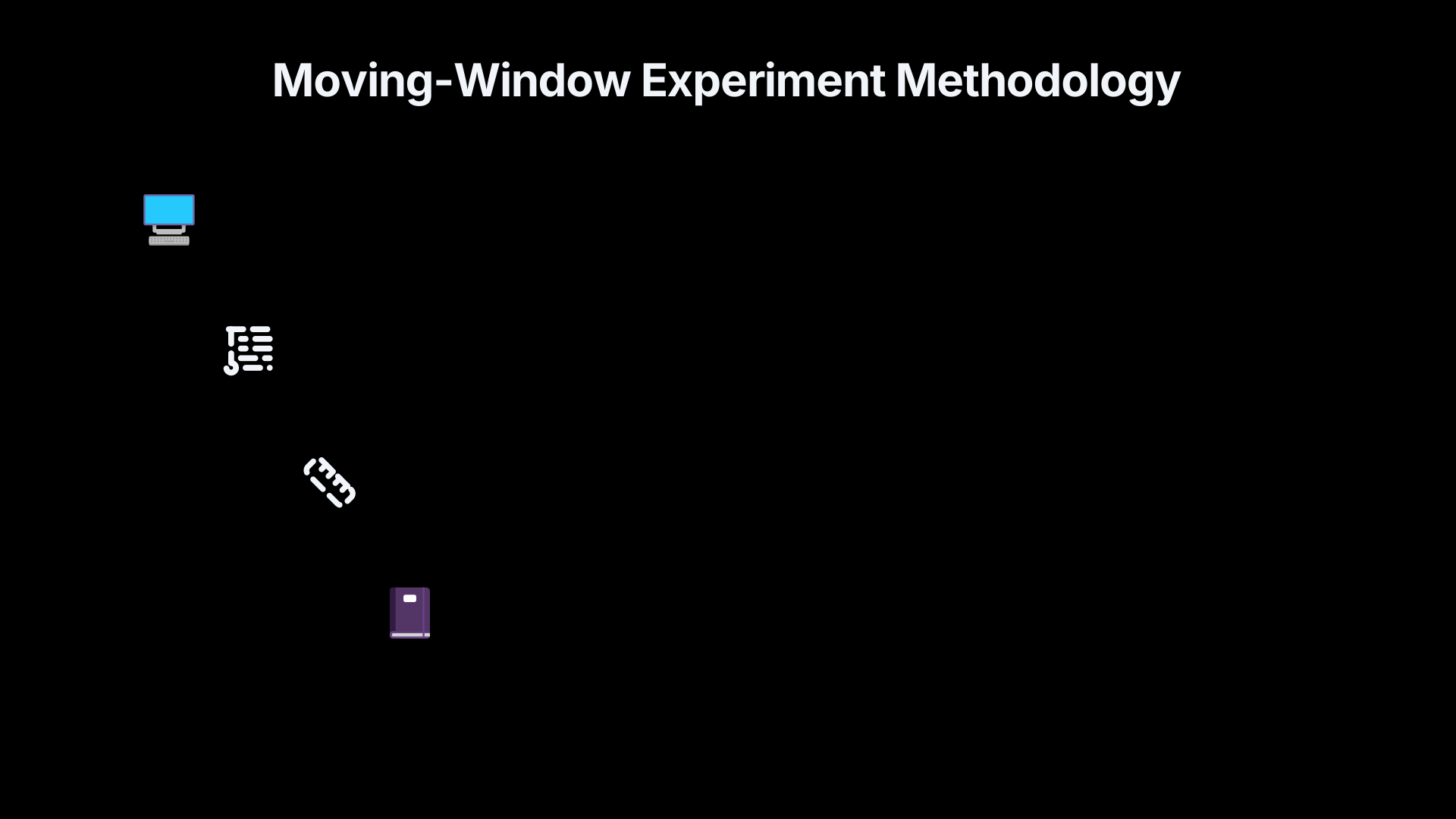
The moving-window paradigm was developed by psychologists George McConkie and Keith Rayner to measure the perceptual span—the area from which readers obtain useful information during a fixation. Eye-tracking equipment continuously monitors where a reader is looking. A computer then displays normal text only within a predefined window centred on the current fixation point. Everything outside that window is masked, replaced, or distorted so that it cannot provide useful linguistic information. As the eyes move, the visible window moves with them.[ResearchGate+2PMC]researchgate.netThe gaze-contingent moving window in readingReading involves allocating attention across the text, and the size of this span…
This design creates a powerful experimental logic. If readers truly use information from far outside the fixation area, masking that information should damage reading performance. If they do not use it, reading should remain largely unchanged. Unlike self-reports or training-course demonstrations, the method directly measures what information contributes to real-time reading.[ResearchGate]researchgate.netThe gaze-contingent moving window in readingReading involves allocating attention across the text, and the size of this span…
Researchers can vary the window size systematically. One condition might allow only a few letters around fixation; another might reveal a wider region extending across multiple words. By comparing reading speed, fixation durations, and eye-movement patterns across conditions, investigators can estimate the minimum span needed for near-normal reading.[ResearchGate]researchgate.netThe gaze-contingent moving window in readingReading involves allocating attention across the text, and the size of this span…
What Happens When the Visible Span Gets Smaller?
The central finding is remarkably consistent. Reading remains relatively efficient when the visible region includes the area that normally forms the perceptual span. However, once the window becomes smaller than that span, reading speed drops and eye movements become less efficient. Readers make more fixations, spend longer processing text, and often need additional eye movements to compensate for missing information.[ResearchGate+2PMC]researchgate.netThe gaze-contingent moving window in readingReading involves allocating attention across the text, and the size of this span…
For skilled readers of English, classic moving-window studies found that useful information extends only a few letters to the left of fixation and roughly 14–15 letters to the right. When text beyond that range is hidden, reading changes very little. This is the crucial result: if readers were routinely processing entire lines, masking most of a line should cause severe disruption. Instead, the hidden text often has little effect because it was not contributing much information in the first place.[ResearchGate+2PMC]researchgate.netThe gaze-contingent moving window in readingReading involves allocating attention across the text, and the size of this span…
The pattern has been replicated across many populations and research programmes. Studies have used the moving-window method to examine differences between faster and slower readers, children and adults, older and younger readers, second-language readers, and various clinical groups. Although the exact span size can vary, the general conclusion remains the same: reading depends on information from a limited region around fixation rather than from an entire line of text.[SCIRP+3PMC+3PubMed]pmc.ncbi.nlm.nih.govPMCEye movements, the perceptual span, and reading speedby K Rayner · 2010 · Cited by 467 — The main findings were that fast readers (reading at about 330 wpm) had a larger perceptual span t…

A useful comparison
Consider two competing hypotheses:
- Whole-line reading claim: readers absorb most or all of a line at once.
- Limited-span hypothesis: readers use information from a relatively small area around fixation.
Moving-window experiments create a straightforward prediction. If the whole-line claim were correct, masking most of the line should dramatically impair reading. Instead, researchers repeatedly find that readers perform normally when only a modest window is visible, provided it covers the perceptual span.[ResearchGate]researchgate.netThe gaze-contingent moving window in readingReading involves allocating attention across the text, and the size of this span…
That outcome strongly favours the limited-span explanation.
Why the Results Challenge Whole-Line Promises
Many speed-reading systems promise that training can teach readers to expand visual intake so dramatically that they can process entire lines, paragraphs, or pages through peripheral vision. Moving-window studies test this proposition more directly than almost any other experimental method.[readlite.in]readlite.inPerceptual Span: How Much Can Your Eyes See While…Many speed-reading programs promise to expand your peripheral vision so you can take…
If readers truly extracted substantial information from distant words across a line, then restricting visibility outside a small fixation-centred window would cripple reading. Yet the experiments show that readers continue to read effectively when large portions of the surrounding text are hidden. The implication is not that peripheral vision is useless. Readers do gain preview information from upcoming words, and this preview helps guide eye movements. However, the amount of useful information obtained from the parafoveal region is limited and falls far short of full word-by-word recognition across an entire line.[PMC+2PMC]pmc.ncbi.nlm.nih.govPMCEye movements, the perceptual span, and reading speedby K Rayner · 2010 · Cited by 467 — The main findings were that fast readers (reading at about 330 wpm) had a larger perceptual span t…
Another important point is that faster readers do not escape these constraints. Research indicates that faster readers often possess somewhat larger perceptual spans than slower readers, but the difference is measured in a handful of characters, not in whole lines. The evidence supports modest efficiency gains, not a transformation of peripheral vision into a high-resolution reading system.[PMC]pmc.ncbi.nlm.nih.govPMCEye movements, the perceptual span, and reading speedby K Rayner · 2010 · Cited by 467 — The main findings were that fast readers (reading at about 330 wpm) had a larger perceptual span t…
What Moving-Window Evidence Actually Supports
The moving-window literature does not suggest that reading speed is fixed or that improvement is impossible. Instead, it identifies where gains are likely to come from.
The evidence is compatible with improvements such as:
- More efficient use of parafoveal preview.
- Reduced unnecessary regressions.
- Better language knowledge and vocabulary.
- Slightly larger perceptual spans among skilled readers.[PMC+2Ferreira Lab]pmc.ncbi.nlm.nih.govPMCEye movements, the perceptual span, and reading speedby K Rayner · 2010 · Cited by 467 — The main findings were that fast readers (reading at about 330 wpm) had a larger perceptual span t…
What the evidence does not support is the idea that readers can bypass the normal fixation-based process and absorb extensive stretches of text with equal clarity across the visual field. The moving-window method was designed specifically to determine how much text readers actually use, and its results consistently point to a constrained, fixation-centred span of effective vision rather than panoramic reading.[ResearchGate+2PMC]researchgate.netThe gaze-contingent moving window in readingReading involves allocating attention across the text, and the size of this span…
Amazon book picks
Further Reading
Books and field guides related to The Experiment That Shrinks Speed-Reading Claims. Use these as the next step if you want deeper reading beyond the article.
Speed reading
Directly addresses claims about reading speed that moving-window research evaluates.
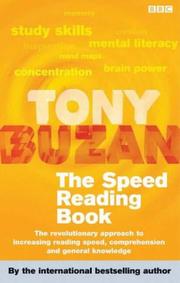
The Speed Reading Book
Directly addresses claims about reading speed that moving-window research evaluates.
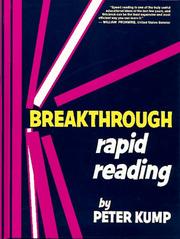
Breakthrough rapid reading
Provides a mainstream framework for reading efficiency and eye-movement habits.
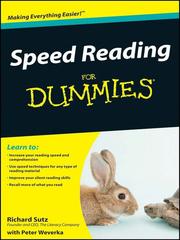
Speed Reading For Dummies
Covers reading mechanics and common speed-reading assumptions.
eBay marketplace picks
Marketplace Samples
Example marketplace items related to this page. Use the search link to explore similar finds on eBay.


Endnotes
1.
Source: researchgate.net
Link:https://www.researchgate.net/publication/271754456_The_gaze-contingent_moving_window_in_reading_Development_and_review
Source snippet
The gaze-contingent moving window in readingReading involves allocating attention across the text, and the size of this span...
2.
Source: pmc.ncbi.nlm.nih.gov
Title: PMCEye movements, the perceptual span, and reading speed
Link:https://pmc.ncbi.nlm.nih.gov/articles/PMC3075059/
Source snippet
by K Rayner · 2010 · Cited by 467 — The main findings were that fast readers (reading at about 330 wpm) had a larger perceptual span t...
3.
Source: pmc.ncbi.nlm.nih.gov
Title: In this paradigm, within a window
Link:https://pmc.ncbi.nlm.nih.gov/articles/PMC11335319/
Source snippet
The Perceptual Span in Dyslexic Reading and Visual Searchby SG Luke · 2024 · Cited by 8 — The perceptual span in reading is explored u...
4.
Source: researchgate.net
Title: Research Gate1 The moving-window paradigm
Link:https://www.researchgate.net/figure/The-moving-window-paradigm-A-pre-defined-window-of-visible-text-is-moving-contingent-on_fig1_291379482
Source snippet
A pre-defined...A pre-defined window of visible text is moving contingent on the current gaze position (asterics) across the sentence. O...
5.
Source: pmc.ncbi.nlm.nih.gov
Title: PMCEye Movements in Reading: [Models]({{ ‘models/’ | relative_url }}) and Data
Link:https://pmc.ncbi.nlm.nih.gov/articles/PMC2906818/
Source snippet
Movements in Reading: Models and Data - PMC - NIHFirst, the perceptual span (or region of effective vision during a fixation) extends 3–4...
6.
Source: scirp.org
Title: Rayner, K., Slattery, T
Link:https://www.scirp.org/reference/referencespapers?referenceid=1334381
Source snippet
J., & Bélanger, N. N. (2010). Eye...In an experiment using the gaze-contingent moving window paradigm, we compared perceptual span betwe...
7.
Source: readlite.in
Link:https://readlite.in/concepts/perceptual-span-reading
Source snippet
Perceptual Span: How Much Can Your Eyes See While...Many speed-reading programs promise to expand your peripheral vision so you can take...
8.
Source: pmc.ncbi.nlm.nih.gov
Title: PMCFlexibility in the perceptual span during reading
Link:https://pmc.ncbi.nlm.nih.gov/articles/PMC7297868/
Source snippet
in the perceptual span during reading - PMC - NIHby J Su · 2020 · Cited by 22 — Readers can acquire useful information from only a narrow...
9.
Source: researchgate.net
Link:https://www.researchgate.net/publication/49694262_Eye_movements_the_perceptual_span_and_reading_speed
Source snippet
Eye movements, the perceptual span, and reading speedThe main findings were that fast readers (reading at about 330 wpm) had a larger per...
10.
Source: researchgate.net
Link:https://www.researchgate.net/publication/278045291_Individual_differences_in_the_perceptual_span_during_reading_Evidence_from_the_moving_window_technique
Source snippet
Individual differences in the perceptual span during reading16 Nov 2015 — We report the results of an eye tracking experiment that used t...
11.
Source: scirp.org
Title: Mc Conkie, G
Link:https://www.scirp.org/reference/referencespapers?referenceid=1334367
Source snippet
W., & Rayner, K. (1975). The Span of...In an experiment using the gaze-contingent moving window paradigm, we compared perceptual span be...
12.
Source: scirp.org
Link:https://www.scirp.org/journal/paperinformation?paperid=51379
Source snippet
eader during eye fixation, has been well investigated among native or first...
13.
Source: ferreiralab.faculty.ucdavis.edu
Title: Choi et al. 2015 MovingWindowIDiffs APP
Link:https://ferreiralab.faculty.ucdavis.edu/wp-content/uploads/sites/222/2015/05/Choi-et-al.-2015_MovingWindowIDiffs_APP.pdf
Source snippet
Ferreira LabIndividual differences in the perceptual span during readingby W Choi · 2015 · Cited by 79 — We examined reading rate measure...
14.
Source: pubmed.ncbi.nlm.nih.gov
Link:https://pubmed.ncbi.nlm.nih.gov/19739933/
Source snippet
W. McConkie & K. Rayner...
15.
Source: ferreiralab.faculty.ucdavis.edu
Title: Henderson Ferreira 1993 FovealProcessingDifficulty Canadian J of Exp Psych
Link:https://ferreiralab.faculty.ucdavis.edu/wp-content/uploads/sites/222/2015/05/Henderson-Ferreira-1993_FovealProcessingDifficulty_Canadian-J-of-Exp-Psych.pdf
Source snippet
(1986) found that the average perceptual span of a beginning reader was about. 20% smaller than that of a skilled...Read more...
16.
Source: pmc.ncbi.nlm.nih.gov
Link:https://pmc.ncbi.nlm.nih.gov/articles/PMC3875174/
Source snippet
by B Miller · 2013 · Cited by 41 — During reading, readers often describe phenomenologically their eyes moving smoothly across the tex...
17.
Source: pmc.ncbi.nlm.nih.gov
Link:https://pmc.ncbi.nlm.nih.gov/articles/PMC10331593/
Source snippet
movements and the perceptual span in disordered readingby V Whitford · 2023 · Cited by 13 — To address this gap in the literature, we emp...
18.
Source: pmc.ncbi.nlm.nih.gov
Link:https://pmc.ncbi.nlm.nih.gov/articles/PMC7586278/
Source snippet
Search Within a Limited Window Area: Scrolling Versus...by Y Fujii · 2020 · Cited by 7 — This study investigated the nature of visual pe...
19.
Source: pmc.ncbi.nlm.nih.gov
Link:https://pmc.ncbi.nlm.nih.gov/articles/PMC2052928/
Source snippet
Changes in the [Visual Span]({{ 'visual-span/' | relative_url }}) for Reading - PMCby MY Kwon · 2007 · Cited by 154 — The size of the perceptual span is typically measured usin...
20.
Source: pmc.ncbi.nlm.nih.gov
Link:https://pmc.ncbi.nlm.nih.gov/articles/PMC10205180/
Source snippet
by A Strandberg · 2022 · Cited by 19 — A study using a moving-window paradigm by Rayner (31) exemplifies the general developmental cha...
21.
Source: pmc.ncbi.nlm.nih.gov
Link:https://pmc.ncbi.nlm.nih.gov/articles/PMC7540203/
Source snippet
span in individuals with aphasia - PMC - NIHby G DeDe · 2019 · Cited by 6 — The present study investigated whether perceptual span, or th...
22.
Source: pmc.ncbi.nlm.nih.gov
Link:https://pmc.ncbi.nlm.nih.gov/articles/PMC12095895/
Source snippet
distraction during reading: Investigating the effects of...by L Rettie · 2024 · Cited by 4 — We used the moving window paradigm to manip...
23.
Source: frontiersin.org
Link:https://www.frontiersin.org/journals/education/articles/10.3389/feduc.2023.1077882/full
Source snippet
Ultimately, knowledge of what can be gleaned from early readers' natural...
Additional References
24.
Source: speedreading.com
Link:https://speedreading.com/research/eye-movements-visual-processing.php
Source snippet
Eye Movements in Reading | SpeedReading.comEye movements in reading explain speed [reading limits]({{ 'reading-limits/' | relative_url }}): fixations, saccades, perceptual span, a...
25.
Source: pure.royalholloway.ac.uk
Link:https://pure.royalholloway.ac.uk/files/33547401/Perceptual_span_ms_resubmission_clean_Feb16_2019.pdf
Source snippet
ze-contingent moving window paradigm (McConkie & Rayner, 1975, 1976), to establish whether there were any changes...Read more...
26.
Source: escholarship.org
Link:https://escholarship.org/content/qt9bm7t7kc/qt9bm7t7kc_noSplash_c55f829d1bea8766c8b08cfa633cb596.pdf?t=op2mxn
Source snippet
Rayner, 1975). This method replaces the display in a certain region around the reader's current fixation...Read more...
27.
Source: semanticscholar.org
Link:https://www.semanticscholar.org/paper/The-Perceptual-Span-in-Second-Language-Reading%3A-An-Leung-Sugiura/dead0a7bfa9caa0b706bd3e105755e175591b0f1
Source snippet
[PDF] The Perceptual Span in Second Language Reading13 Nov 2014 — The perceptual span, which is the visual area providing useful informat...
28.
Source: youtube.com
Link:https://www.youtube.com/watch?v=zQmf5TkJrJ8
Source snippet
Webinar - Implementing the Invisible Boundary Crossing Paradigm in Experiment Builder...
29.
Source: youtube.com
Link:https://www.youtube.com/watch?v=YAlifBqOaU0
Source snippet
Milliseconds Matter: Understanding How We Read with Eye-Tracking Research...
30.
Source: Wikipedia
Title: Eye movement in reading
Link:https://en.wikipedia.org/wiki/Eye_movement_in_reading
Source snippet
Eye movement in readingHe reported that the eyes do not move continuously along a line of text, but make short, rapid movements (sacca...
31.
Source: youtube.com
Title: Milliseconds Matter: Understanding How We Read with Eye-Tracking Research
Link:https://www.youtube.com/watch?v=NGTH-Jsufik
Source snippet
The Science Behind Reading Speed - College Info Geek...
32.
Source: link.springer.com
Link:https://link.springer.com/article/10.3758/s13414-024-02981-9
Source snippet
and word predictability during reading: Evidence from...by A Pagán · 2025 · Cited by 6 — Our experiment provides compelling complementar...
33.
Source: users.castle.unc.edu
Title: 0912 visual info
Link:https://users.castle.unc.edu/~jlsmith/ling060/outlines/0912_visual-info.pdf
Source snippet
movements in reading • Extracting visual information...12 Sept 2025 — Eye movement patterns during reading: • Regression (regressive sac...
Topic Tree